

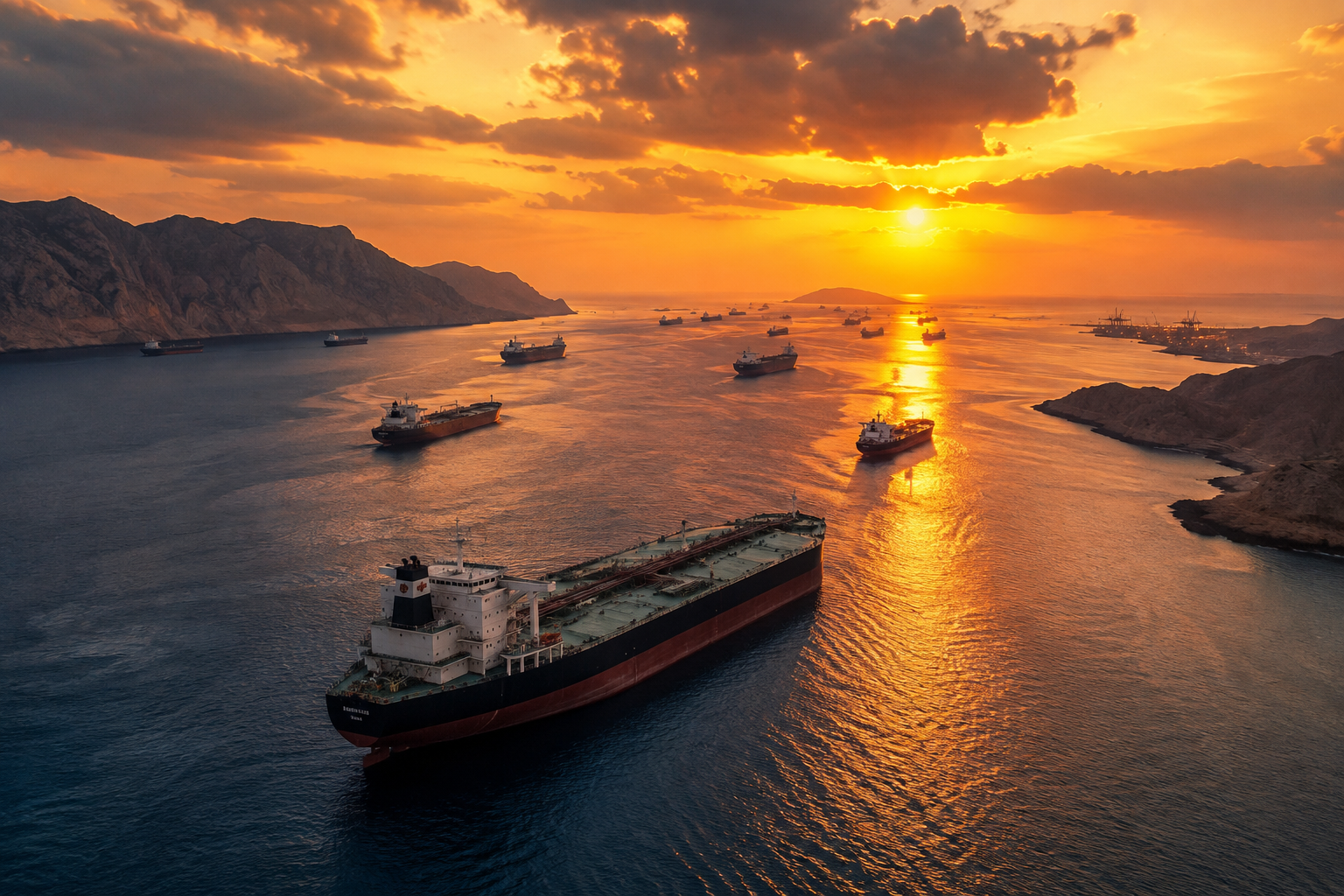
A narrow stretch of water between Iran and Oman has once again become one of the most important pressure points in the global economy.
The Strait of Hormuz connects the Persian Gulf with the Gulf of Oman and the Arabian Sea. Despite its relatively small size, it serves as an essential gateway for energy exports from some of the world’s biggest oil and gas producers.
According to the U.S. Energy Information Administration, oil flows through Hormuz have historically represented roughly 20% of global petroleum liquids consumption. Around one-fifth of global liquefied natural gas trade has also passed through the strait.
Why Hormuz Matters So Much
Major energy exporters including Saudi Arabia, the United Arab Emirates, Kuwait, Iraq and Qatar depend heavily on Gulf shipping routes.
This means disruption in Hormuz does not remain a Middle Eastern problem for long. It can quickly affect energy-importing economies across Asia and beyond.
The impact can spread from crude oil markets to diesel, aviation fuel, electricity generation, manufacturing and transportation costs.
Shipping Has Fallen Dramatically
The current crisis illustrates that vulnerability.
Reuters reported on August 24 that fewer than 20 commodity vessels transited Hormuz over the weekend. Shipping activity over the previous week was approximately 90% below pre-conflict levels, according to vessel-tracking data cited by Reuters.
Before the conflict, roughly 130 to 140 ships typically passed through the strait each day, according to earlier Reuters reporting.
Such a dramatic reduction matters because markets react not only to actual shortages but also to expectations about future supply.
Oil Is Only Part of the Story
The biggest economic danger may not simply be the availability of crude oil.
Asian markets are also facing pressure in supplies of refined petroleum products. Reuters reported that August imports of light and middle distillates into Asia were down 21% from pre-conflict averages, while refining margins have risen sharply.
That matters for ordinary consumers.
Higher diesel costs can make transporting food and manufactured goods more expensive. Expensive aviation fuel can affect airlines and ticket prices, while higher energy costs can feed through to factories, businesses and eventually inflation.
Why Pakistan Should Be Watching Closely
For Pakistan, developments in Hormuz carry particular importance.
Pakistan is heavily dependent on imported energy, meaning prolonged instability in international oil and gas markets can place additional pressure on the country’s import bill, fuel prices, inflation and foreign-exchange requirements.
Pakistan’s geographic proximity to the Gulf also means the country has a strong interest in regional stability and uninterrupted maritime trade.
The issue is therefore not simply geopolitical. For Pakistan, it is also economic.
Diplomacy Could Be as Important as Military Power
Efforts to find a diplomatic solution are continuing.
Iran and Oman have discussed arrangements aimed at restoring more predictable shipping through Hormuz, although the situation remains uncertain.
Meanwhile, tensions between Washington and Tehran continue to influence energy markets. The United States is preparing additional sanctions against Iran, while Tehran has warned of consequences for Gulf oil exports if economic pressure intensifies.
That combination of sanctions, security threats and restricted shipping keeps uncertainty elevated.
A Small Waterway With an Enormous Economic Footprint
The Strait of Hormuz demonstrates how interconnected the modern global economy has become.
A disruption in a relatively narrow maritime corridor can affect an oil tanker leaving the Gulf, a refinery thousands of kilometres away, transportation costs in Asia and eventually the price consumers pay for everyday goods.
That is why governments, energy traders and financial markets watch every development around Hormuz so closely.
The world does not need the strait to close completely for economic damage to occur. Even reduced traffic, higher insurance costs, supply uncertainty and fear of escalation can be enough to push energy prices higher.
As long as tensions surrounding Hormuz remain unresolved, this narrow waterway will remain capable of producing consequences far beyond the Middle East.