

Pakistan-Afghanistan tensions have entered another dangerous phase after Pakistan carried out fresh airstrikes inside Afghanistan, saying it targeted militant hideouts following a renewed wave of security threats.
The strikes on October 1 have once again exposed the deep divide between Islamabad and Kabul. Pakistan says armed groups operating from Afghan territory pose a direct threat to its security. Afghanistan rejects accusations that it allows its territory to be used against Pakistan and has condemned Pakistani military action inside the country.
Behind the latest Pakistan-Afghanistan airstrikes, however, is a much bigger story — one involving the Tehreek-e-Taliban Pakistan (TTP), cross-border militancy, years of failed diplomacy and an increasingly difficult relationship between two neighbours that share a long and sensitive border.
What Happened in the Latest Airstrikes?
Pakistan confirmed on October 1 that it had carried out what the Information Ministry described as “well-planned and calibrated” aerial strikes against militant hideouts at two locations inside Afghanistan.
According to Pakistan’s government, the operation was based on intelligence and targeted camps and safe havens belonging to militant organisations. Initial Pakistani reports said 22 militants were killed and weapons and ammunition were destroyed.
Afghan authorities presented a very different account.
The Taliban-led government said strikes in Kunar and Helmand provinces hit houses and killed at least nine people, including women and children, while 11 others were injured.
The United Nations Assistance Mission in Afghanistan, or UNAMA, reported 10 civilian deaths, most of them children.
Reuters said it could not independently verify the competing accounts.
This difference is important. Pakistan says it carried out precision operations against militants; Afghan authorities say civilians were among the victims. Those claims should therefore be treated separately rather than presenting either version as independently established fact.
Why Are Pakistan and Afghanistan Fighting?
The central issue behind the worsening Pakistan-Afghanistan relations is militancy — particularly the TTP.
The TTP is a separate organisation from the Afghan Taliban, although the two have historical and ideological connections. Pakistan has repeatedly accused the Taliban government in Kabul of allowing TTP fighters to operate from Afghan territory and use safe havens there to plan attacks inside Pakistan.
Kabul denies that it provides sanctuary for groups attacking Pakistan.
This disagreement has become one of the biggest sources of tension between the two countries.
For Islamabad, the argument is that Afghanistan must prevent its territory from being used to launch attacks across the border.
For Kabul, Pakistani military operations inside Afghanistan are viewed as violations of Afghan sovereignty.
Neither side has been able to resolve this basic dispute.
The TTP Has Become the Core Security Problem
The TTP was formed in 2007 from different militant factions and has fought the Pakistani state for years.
Its attacks have been particularly concentrated in Khyber Pakhtunkhwa and areas close to the Afghan border.
After the Afghan Taliban returned to power in Kabul in 2021, Pakistan initially hoped the new government would help contain the TTP. Instead, the security relationship gradually deteriorated.
Pakistan says militant activity increased and that fighters found space across the border.
The Afghan Taliban government has repeatedly rejected Pakistan’s allegations or argued that Pakistan’s security problems need to be addressed internally.
That fundamental disagreement has pushed the two former partners further apart.
What Triggered the Latest Escalation?
The October 1 strikes did not happen in isolation.
Reuters reported that tensions rose again following deadly attacks in Pakistan’s northwest. A suicide attack in September killed 24 people, adding further pressure on Islamabad to respond to militant violence.
Recent violence in Kohat and Hangu had also contributed to renewed tensions, with at least 30 Pakistani deaths reported in attacks that Islamabad linked to militants operating from Afghanistan.
Pakistan subsequently carried out a series of operations that it said targeted militant camps.
At the same time, Afghanistan has made accusations of its own.
On September 27, Afghanistan’s Defence Ministry said its forces had killed 28 fighters who allegedly crossed into Afghanistan from Pakistan. Afghan authorities claimed the group included Islamic State militants.
Pakistan did not publicly confirm that Afghan account at the time.
The result is an increasingly dangerous cycle: an attack occurs, accusations follow, military action is taken, and each side then accuses the other of supporting or harbouring hostile armed groups.
This Crisis Has Been Building Throughout 2026
The latest Afghanistan latest news needs to be understood in the context of what has already happened this year.
Pakistan and Afghanistan have experienced repeated periods of serious confrontation during 2026, including cross-border clashes and Pakistani air operations.
Earlier airstrikes also produced disputes over civilian casualties.
For example, UNAMA confirmed that at least 28 civilians were killed and 49 injured in strikes in Paktya, Paktika and Kunar provinces on June 28. Pakistan confirmed conducting strikes in those provinces.
UNAMA also documented civilian casualties following Pakistani strikes in February.
These previous incidents matter because every civilian casualty allegation makes diplomacy more difficult and increases public anger inside Afghanistan.
From Former Partners to an Increasingly Hostile Relationship
One of the most striking aspects of the crisis is how dramatically relations have changed.
Pakistan maintained links with the Afghan Taliban for decades, including during the Taliban insurgency against the former Afghan government and international forces.
When the Taliban returned to power in August 2021, there was widespread expectation that Islamabad would have significant influence in Kabul.
Instead, the relationship deteriorated.
The TTP issue became a major dividing line. Border disputes, trade restrictions, deportations and security accusations added further pressure.
By 2026, relations had reached a point where military exchanges and airstrikes were no longer isolated incidents.
That is a major change in the regional security picture.
Why the Border Makes Everything More Complicated
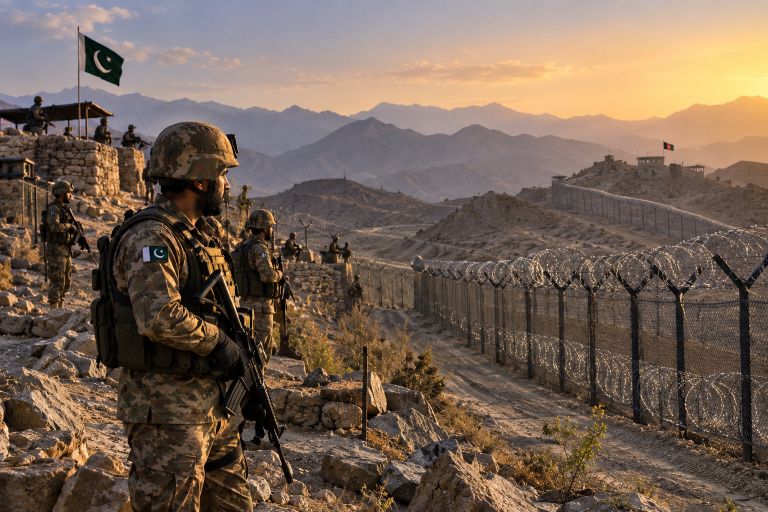
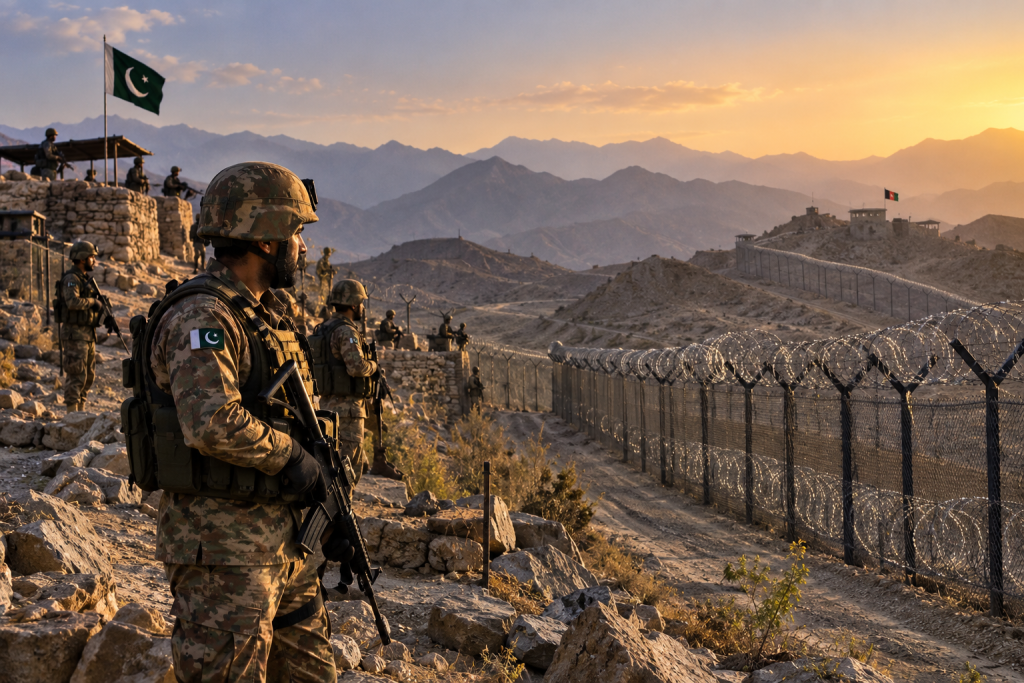
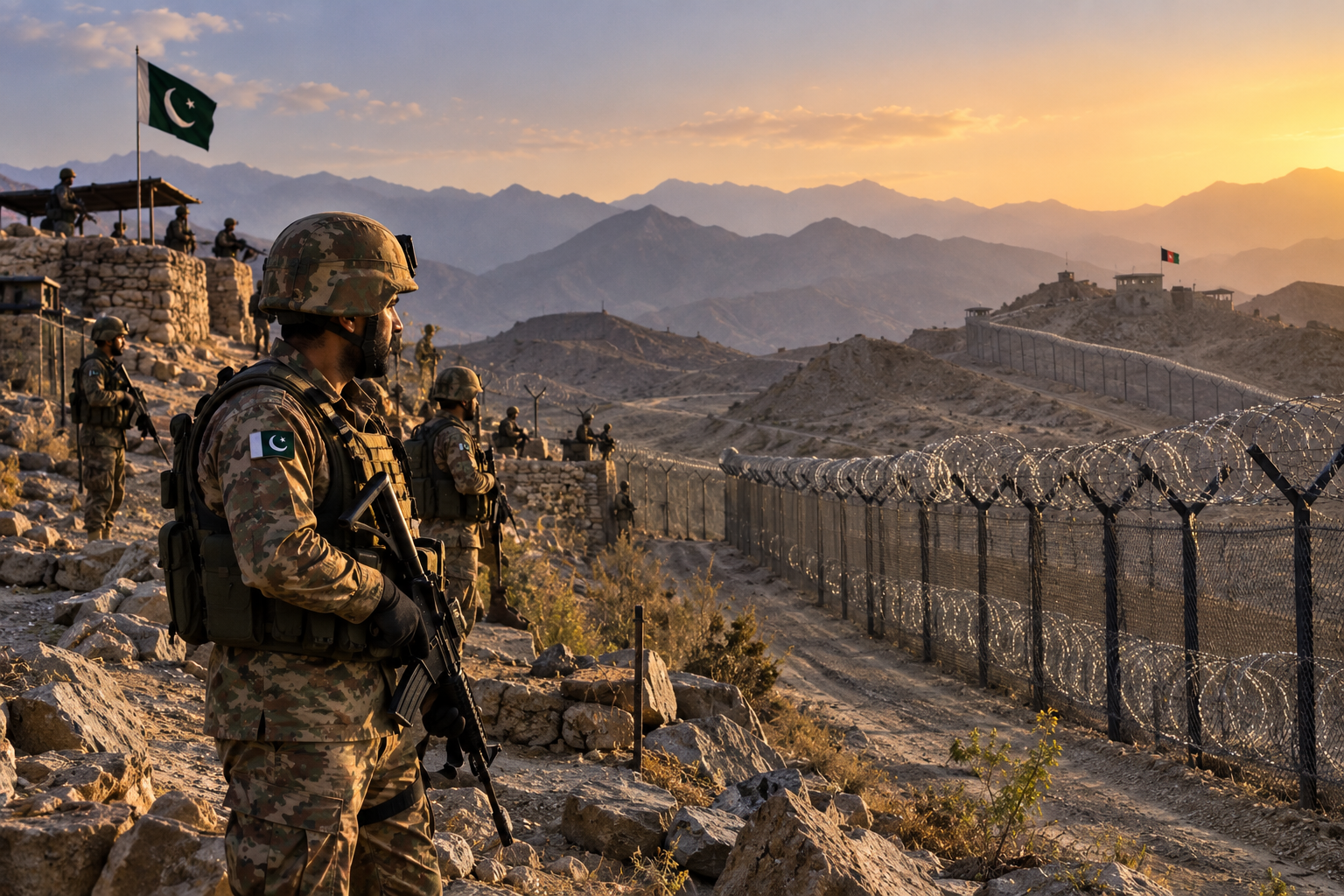
Pakistan and Afghanistan share a border of roughly 2,600 kilometres.
The border passes through difficult mountainous terrain and divides communities with ethnic and family connections on both sides.
Pakistan recognises the Durand Line as the international border. Successive Afghan governments have historically disputed its status.
Border fencing, crossings and military posts have therefore repeatedly become sources of tension.
Militant groups can also take advantage of difficult terrain, making border security extremely challenging.
For Pakistan, controlling militant movement across this region is central to the Pakistan security situation.
For Afghanistan, Pakistani military action across the border raises questions of sovereignty.
Those competing security concerns make finding a lasting solution particularly difficult.
Why Civilian Casualties Matter So Much
The competing casualty claims following the latest strikes could have consequences beyond the immediate military operation.
If civilians are killed during cross-border strikes, anger inside Afghanistan can grow quickly.
That creates political pressure on the Taliban government to respond strongly to Pakistan rather than cooperate with Islamabad.
It can also deepen anti-Pakistan sentiment and make intelligence or security cooperation even harder.
UNAMA has repeatedly called on parties involved in the conflict to respect the principles of distinction, proportionality and precaution designed to protect civilians.
This is one reason casualty claims need careful verification rather than being treated as part of the political messaging from either side.
Could the Situation Escalate Further?
That is now one of the biggest concerns.
A single airstrike does not necessarily mean the two countries are moving towards a larger conflict. But repeated cross-border attacks create opportunities for miscalculation.
If Afghan forces retaliate against Pakistani positions, Pakistan could respond again. A cycle of retaliation could then become increasingly difficult to control.
Both countries have reasons to avoid that outcome.
Afghanistan is already dealing with serious economic and humanitarian challenges. Pakistan is confronting domestic security threats while also trying to maintain economic stability.
A prolonged military confrontation would create additional pressure on both sides.
Trade and Border Crossings Could Also Be Affected
Security tensions between Pakistan and Afghanistan are not limited to the battlefield.
The two countries have important trade connections, and Afghanistan relies heavily on routes through Pakistan for access to regional and international markets.
Whenever major border crossings are closed because of fighting or political disputes, traders, transporters and ordinary travellers can be affected.
Long queues of trucks can form at border points, goods can be delayed and businesses can face additional costs.
That means worsening Pakistan-Afghanistan tensions could eventually affect people who have nothing to do with the fighting.
What Does Pakistan Want From Kabul?
Pakistan’s central demand has remained broadly consistent: Afghan territory should not be used by militants to organise or launch attacks against Pakistan.
Islamabad wants Kabul to take stronger action against the TTP and other groups it says operate from Afghanistan.
From Pakistan’s perspective, this is a national-security issue rather than simply a diplomatic disagreement.
Afghanistan, however, argues that Pakistan cannot solve its internal militant problem through military action on Afghan soil.
That leaves both governments with fundamentally different interpretations of the same security crisis.
Why This Matters for the Wider Region
The deterioration of Pakistan-Afghanistan relations has implications beyond the two countries.
China has economic and security interests in both Pakistan and Afghanistan and has previously supported diplomatic efforts to reduce tensions.
Central Asian countries also want greater regional trade and connectivity through Afghanistan and Pakistan.
Continued instability makes those ambitions harder.
Militant organisations can also benefit when governments become consumed by interstate confrontation rather than cooperating against armed groups.
For that reason, the crisis is not simply a border dispute. It has implications for security across South and Central Asia.
What Happens Next?
The immediate question is whether October’s Pakistan-Afghanistan airstrikes lead to another round of retaliation or whether diplomatic channels can prevent further escalation.
The deeper challenge will remain even if the guns fall silent.
Pakistan wants credible action against militants it says are based across the border. Afghanistan wants an end to Pakistani strikes on its territory and rejects Islamabad’s accusations about militant sanctuaries.
Until those two positions can be brought closer together, periods of calm may remain fragile.
For ordinary people on both sides of the border, that is the most worrying part of the current crisis.
The latest strikes may eventually end as another episode in a long-running security dispute. But if the cycle of militant attacks, accusations and cross-border military responses continues, the Pakistan security situation and Afghanistan’s own stability could become even more difficult.
The real test now is not simply what happens after one night of airstrikes. It is whether Islamabad and Kabul can find a way to address militant violence without allowing an already damaged relationship to slide into another prolonged confrontation.