

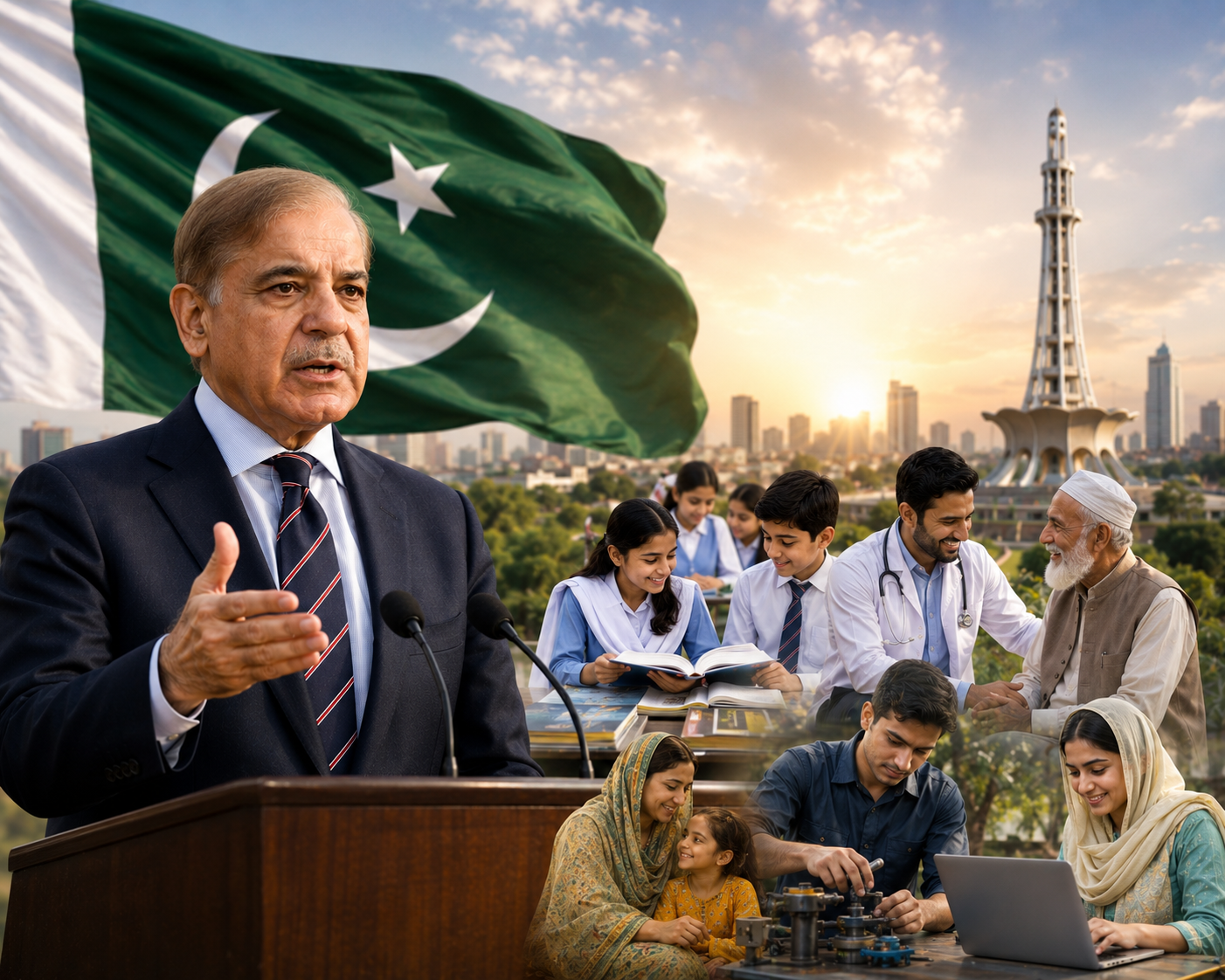
Prime Minister Shehbaz Sharif has acknowledged that Pakistan still has a considerable distance to cover before it can fully realise the vision of a welfare state, stressing the need for stronger public services and greater opportunities for ordinary citizens.
His remarks put the spotlight on a long-standing national ambition: building a system in which economic development translates into better living standards, accessible healthcare, quality education and greater social protection.
For millions of Pakistanis, the idea of a welfare state is closely linked to everyday concerns. Access to affordable healthcare, quality education, employment and financial security remains a challenge for many families, particularly amid continuing economic pressures.
The prime minister has also emphasised the importance of investing in the country’s young population. With a large and increasingly ambitious youth workforce, providing better education and employment opportunities is crucial to Pakistan’s long-term economic prospects.
Education remains one of the key areas where greater investment could have a lasting impact. Improving the quality of public schools, expanding access to higher and technical education, and developing skills relevant to the modern job market could help more young Pakistanis compete for employment at home and abroad.
Healthcare is another major component of the welfare-state debate. While Pakistan has made progress in expanding healthcare services, access and affordability remain significant concerns, particularly for lower-income households.
At the same time, economic growth remains essential. A sustainable welfare system requires a strong economy capable of generating jobs, increasing government revenues and funding social programmes without placing an excessive burden on citizens.
This makes the challenge more complicated than simply increasing welfare spending. It requires improvements in governance, taxation, public-sector efficiency and the delivery of essential services.
Pakistan’s founding vision has often been discussed alongside the concept of a society based on social justice and equal opportunity. Turning that vision into reality, however, requires policies that deliver tangible improvements in people’s daily lives.
The prime minister’s remarks therefore highlight a challenge that extends beyond any single government. Building a welfare state is a long-term process that requires consistent investment in people, institutions and the economy.
For Pakistan, the question is no longer simply whether it can become a welfare state, but how quickly meaningful reforms can translate into better education, healthcare, employment and social protection for its citizens.