

Pakistan’s inflation rate eased in September, offering some positive economic news, but for families struggling with grocery bills and everyday expenses, the change may not immediately feel like relief.
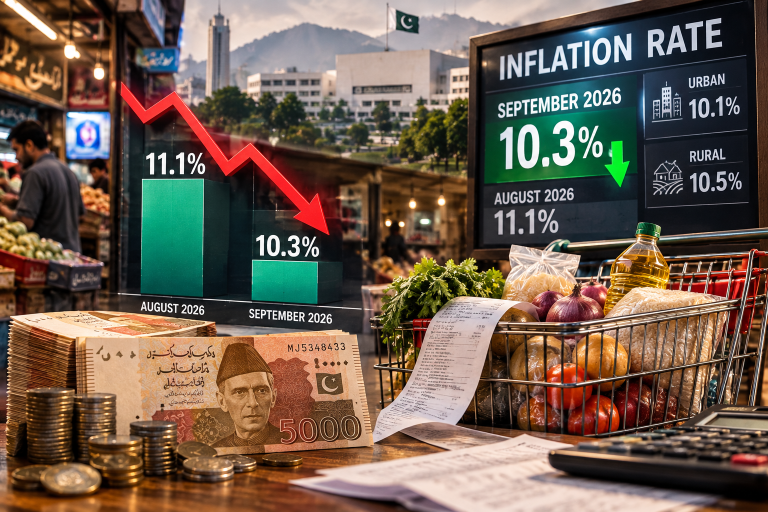
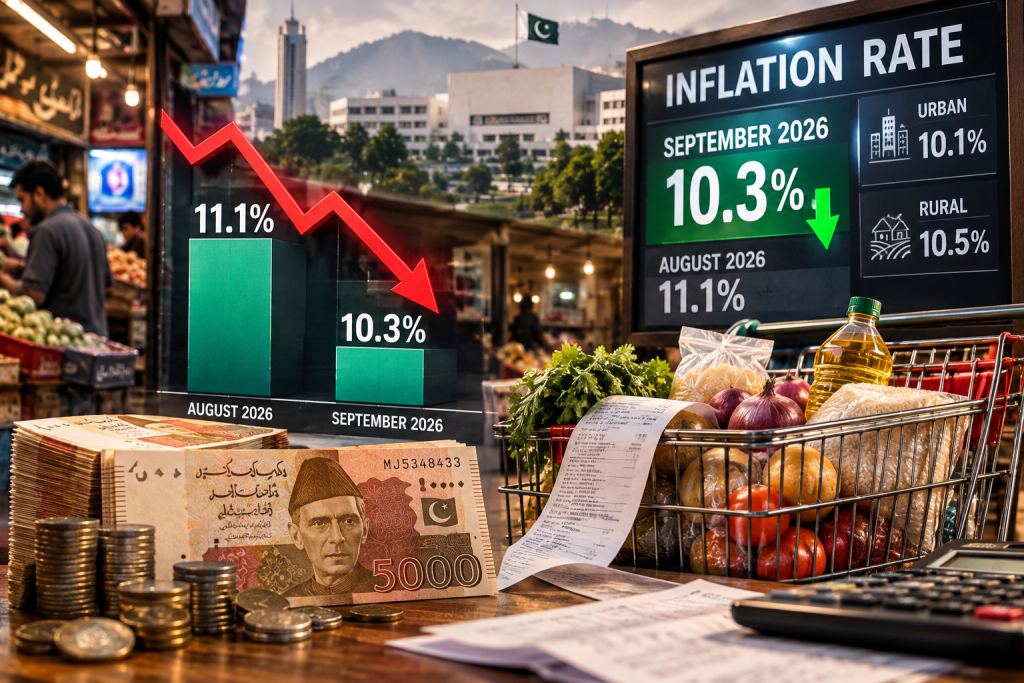
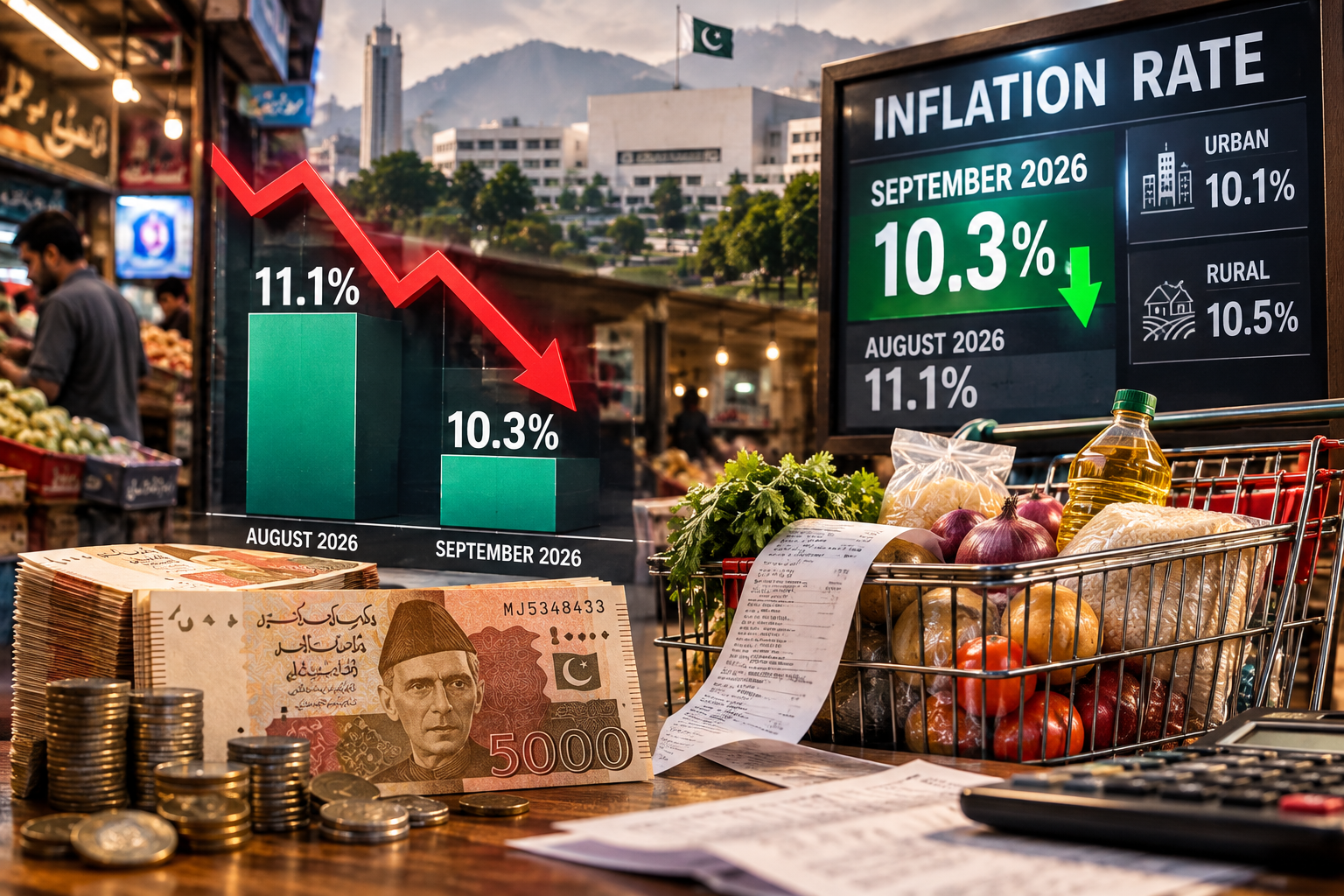
According to official data, Pakistan inflation September 2026 stood at 10.3%, down from 11.1% in August. Urban inflation was recorded at 10.1%, while rural inflation remained slightly higher at 10.5%.
The numbers show that the pace of price increases has slowed. However, that does not mean prices have actually gone back down.
What Does 10.3% Inflation Really Mean?
This is an important difference for ordinary consumers.
When inflation falls from 11.1% to 10.3%, it means prices are generally increasing at a slower rate than before. It does not mean groceries, electricity, transport or other household expenses have suddenly become 0.8% cheaper.
So, while the latest inflation rate Pakistan today shows improvement compared with August, families may still feel considerable pressure on their monthly budgets.
Food Prices Still Matter Most for Families
For millions of households, inflation is not simply an economic number. It is what they experience every time they visit a grocery store or local market.
Changes in food prices Pakistan can have a particularly strong impact because essentials such as vegetables, flour, cooking oil, milk, meat and other daily-use items take up a significant part of household spending.
Even when overall inflation slows, sharp increases in individual food items can make life difficult for lower and middle-income families.
Urban and Rural Inflation Remain Above 10%
The latest Pakistan CPI 2026 figures also show a difference between urban and rural areas.
Urban CPI inflation was reported at 10.1%, while rural inflation stood at 10.5% in September.
This matters because spending patterns are different across the country. Food, transport, energy and other essential expenses can affect rural and urban households differently.
Is This Good News for Pakistan’s Economy?
A decline in inflation is generally an encouraging sign for the Pakistan economy, especially if the trend continues over several months.
Lower and more stable inflation can improve consumer confidence and make financial planning easier for households and businesses. Inflation trends can also influence monetary policy decisions, although the State Bank considers several economic indicators rather than one monthly reading alone.
For consumers, however, the real improvement will be felt when household incomes can better keep pace with living costs.
What Happens Next?
The fall in Pakistan inflation September 2026 from 11.1% to 10.3% is a positive movement, but one month does not establish a long-term trend.
The coming months will be important. Fuel and energy costs, the rupee, agricultural supply, international commodity prices and government policies can all influence future inflation.
For now, Pakistan’s inflation rate is moving in the right direction compared with August. But for ordinary people, the bigger question is not only whether inflation is falling — it is when everyday life will actually start feeling more affordable.