

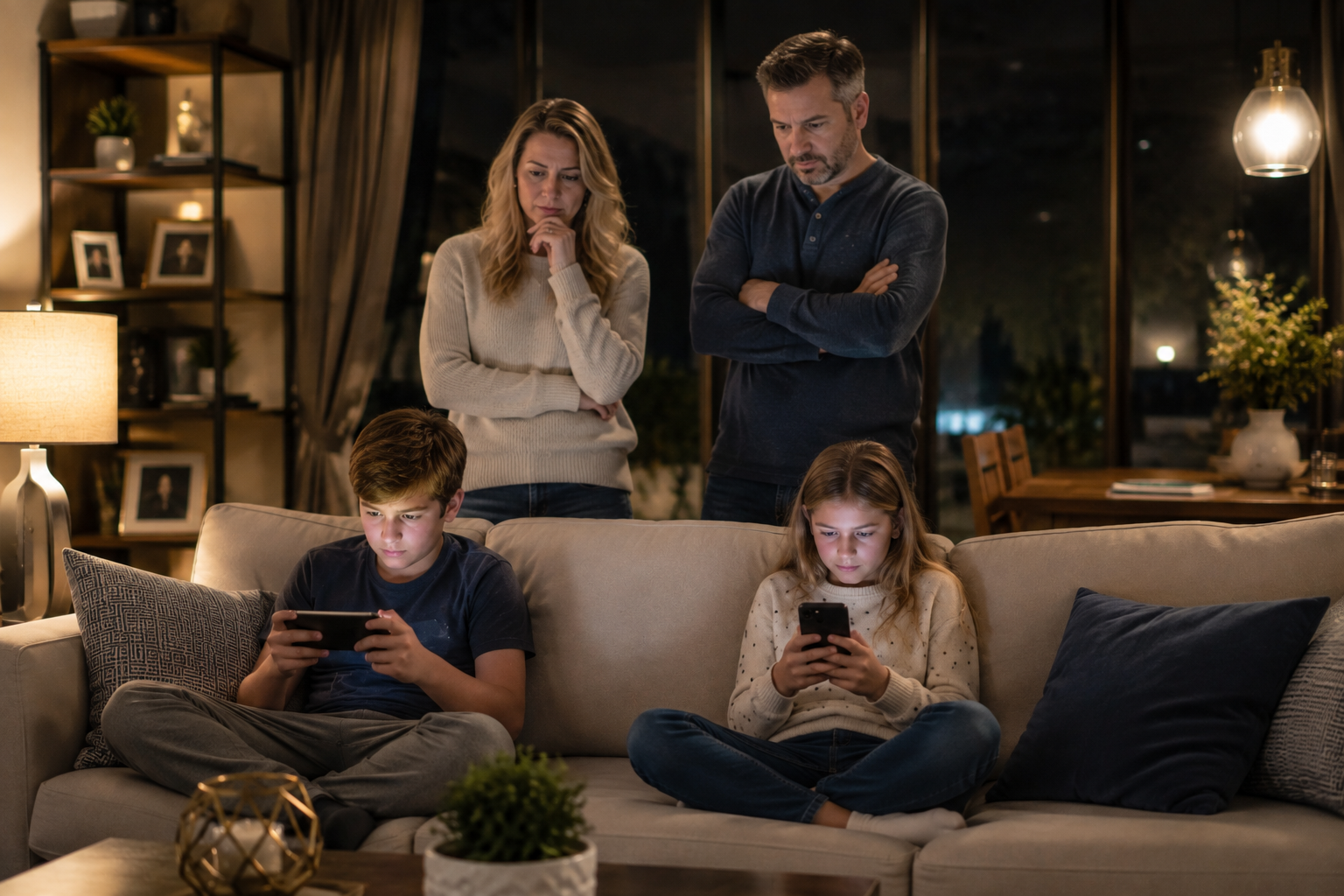
For millions of children, social media has become part of everyday life.
It is where they talk to friends, watch videos, follow celebrities, discover trends and increasingly learn about the world. But governments are now asking a much more difficult question: should children under 16 be allowed on social media at all?
The debate is moving rapidly from family dinner tables into national parliaments.
Australia has already introduced a social-media minimum age of 16, while New Zealand’s government has now proposed its own legislation aimed at preventing children under 16 from accessing major social platforms.
The developments could signal the beginning of a much larger global shift in how governments regulate children’s digital lives.
Why Governments Are Taking Action
The argument for stronger restrictions centres on concerns about what children encounter online and how platforms are designed to keep users engaged.
Infinite scrolling, algorithmic recommendations, likes, disappearing stories and constant notifications can encourage users to spend significant amounts of time online.
New Zealand Prime Minister Christopher Luxon said when announcing his government’s proposal that one in three children aged 13 to 17 in the country spends at least five hours a day on social media.
Supporters of restrictions argue that children can also be exposed to cyberbullying, harmful content, online exploitation and social pressures before they are mature enough to manage them.
Australia Has Already Taken the Leap
Australia has become the world’s most closely watched experiment.
Since December 2025, age-restricted social-media platforms have been required to take reasonable steps to prevent Australians under 16 from maintaining accounts.
The restrictions cover major platforms including Instagram, Facebook, TikTok, Snapchat, X, Reddit and YouTube, while messaging, gaming, education and some other services are treated differently.
Importantly, the responsibility is primarily placed on technology companies rather than children or their parents.
The idea is straightforward: governments regulate products and environments that can pose risks to children in the physical world, so advocates believe powerful digital platforms should face similar obligations.
But Can a Social Media Ban Actually Work?
This is where the debate becomes complicated.
Children who want access to social media may enter false dates of birth, use another person’s account or find alternative platforms.
Australia’s experience illustrates the challenge. Meta said in August that it had removed more than 756,000 Facebook and Instagram accounts believed to belong to Australians under 16.
Yet significant numbers of younger users have continued finding ways to access social media.
This raises a fundamental question: is banning children realistic in an internet environment designed to cross borders and devices almost instantly?
The Privacy Problem
Age verification creates another dilemma.
If platforms must prove that users are old enough, they need some method of determining age.
New Zealand’s proposed approach could involve existing account information, digital identification and facial age-estimation technology.
But stronger age verification can require users to provide more personal information.
That creates an uncomfortable trade-off: governments may attempt to improve children’s privacy and safety by requiring technology companies to collect information capable of verifying who users are.
Any successful age-verification system therefore needs strong privacy protections alongside effective enforcement.
Should Parents Decide Instead?
Critics argue that governments are going too far.
New Zealand’s proposal has already encountered political opposition, with critics arguing that deciding when a child should use social media should primarily be the responsibility of parents.
That argument has considerable appeal.
A mature 15-year-old using social media to communicate with family or learn a skill is very different from a younger child spending hours consuming algorithmically recommended content without supervision.
A universal age limit cannot easily capture those differences.
There is also concern that banning children could simply push their online activity into less visible spaces, making it harder for parents to understand what they are doing.
Social Media Has Benefits Too
Social media is not inherently harmful.
For many teenagers it provides friendship, creativity, education and access to communities they may not find locally.
Young entrepreneurs can learn business skills. Students can access educational material. Aspiring artists, athletes and creators can showcase their abilities to audiences that would have been impossible to reach a generation ago.
The challenge is therefore not simply deciding whether social media is good or bad.
It is determining whether platforms designed primarily for adults can be made sufficiently safe for children.
What Could Pakistan Learn?
The debate has direct relevance for Pakistan.
Millions of young Pakistanis have access to smartphones, video platforms and social networks, while concerns surrounding cyberbullying, inappropriate content, online harassment and children’s privacy continue to grow.
Pakistan does not necessarily have to copy Australia or New Zealand.
But it can learn from their experiments.
Stronger parental controls, age-appropriate accounts, digital-literacy education, safer recommendation systems and meaningful age verification could all become part of a broader child-safety framework.
Schools and parents also have a role. Teaching children how algorithms work, how personal information can spread online and how to identify manipulation may ultimately prove as important as restricting access.
Protection Without Disconnecting a Generation
The global debate should not simply become a choice between unrestricted social media and a complete digital ban.
Children need protection.
But they also need digital skills to function in a world where technology will play an even greater role in education, employment and relationships.
Australia has chosen regulation. New Zealand is considering following it. Other countries will be watching closely.
The results could determine whether 16 eventually becomes for social media what minimum-age rules already are for many activities in the physical world.
The real question may therefore no longer be whether governments will regulate children’s social-media use.
It may be how far they are prepared to go.