

AQI Crosses 400 in Recent Readings as Winter Smog Covers Lahore, Raising Serious Concerns About Public Health, Schools and Daily Life
LAHORE — November 5, 2026
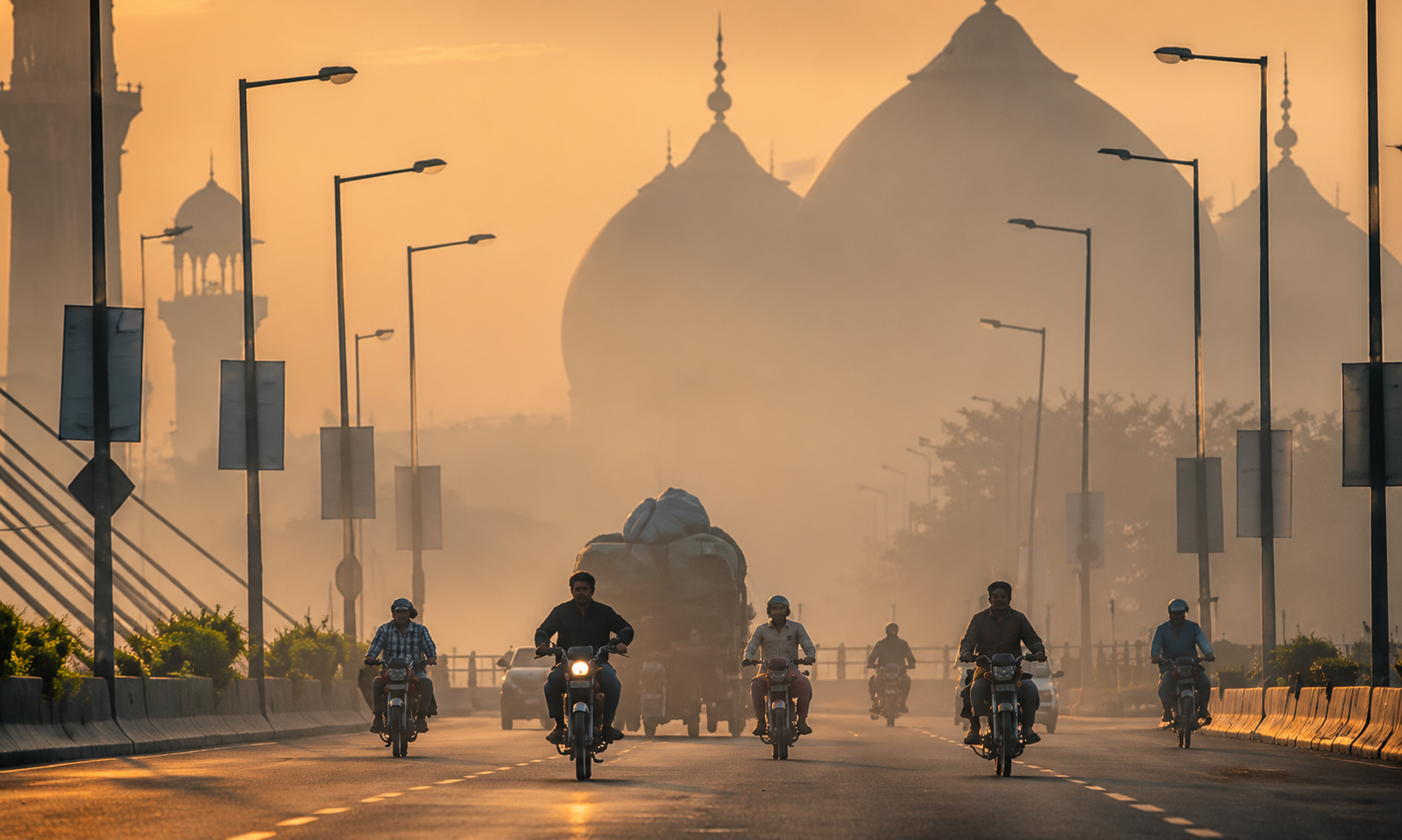
Lahore is once again facing a serious air pollution problem as winter smog spreads across the city, making everyday life difficult for millions of residents.
The thick layer of polluted air has brought fresh concerns about public health, outdoor activities and the safety of people who spend long hours outside.
From children travelling to school to workers riding motorcycles through busy roads, thousands of people are exposed to polluted air during their daily routines.
The latest air quality readings have also placed Lahore among the world’s most polluted cities, bringing Pakistan’s growing air pollution crisis back into the spotlight.
Lahore AQI Reaches Dangerous Levels
Air quality in Lahore has changed sharply over recent days.
According to IQAir, Lahore recorded an Air Quality Index (AQI) of 447 on November 3, placing the city at the top of its global pollution ranking at that time.
Punjab’s official air quality dashboard showed a different reading on November 5, reporting an AQI of 168 at 4 PM. The figures vary because air quality changes throughout the day and monitoring systems use different stations and methods.
These readings show how quickly Lahore’s air quality can change during the winter smog season.
An AQI above 300 is generally classified as hazardous under the US AQI system, while readings between 151 and 200 are considered unhealthy.
The situation has raised concerns about the amount of fine pollution particles present in the city’s air.
Why Is Lahore Covered in Smog?
Lahore’s winter smog is caused by several sources of air pollution.
Vehicle emissions, factory smoke, brick kiln emissions, construction dust and the burning of agricultural waste all contribute to the problem.
During colder months, weather conditions can make the situation worse.
Cold air, weak winds and temperature changes can trap pollutants close to the ground instead of allowing them to spread.
As a result, smoke and harmful particles remain in the air for longer periods, creating the thick haze seen across Lahore.
Reuters reported that falling temperatures and slow winds contributed to the sharp rise in pollution across northern Pakistan and nearby parts of India.
Children, Families and Outdoor Workers Face Daily Challenges
Behind every air quality number are people dealing with the effects of polluted air.
Children travelling to school, motorcycle riders, traffic police, street vendors and construction workers spend time outside even when pollution levels are high.
For families, the concern is especially serious when children and older people are exposed to poor air quality.
Air pollution can cause breathing problems, coughing and irritation in the eyes and throat. Fine particles known as PM2.5 are particularly concerning because they can travel deep into the lungs.
People with asthma, heart conditions and other breathing problems may face greater health risks during severe smog.
The crisis is not limited to one part of Lahore. Poor air quality can affect residents across different neighbourhoods and communities.
Schools and Daily Activities Face Smog Concerns
As winter smog returns, schools and educational institutions are also facing concerns about student safety.
Poor air quality can make outdoor sports, morning activities and travelling to school more difficult.
Authorities may introduce school closures or other restrictions when pollution reaches dangerous levels.
However, any closure announcement should be confirmed through an official government notification rather than social media reports.
Parents and teachers are also being encouraged to follow official air quality updates and take precautions during periods of heavy pollution.
What Is Causing Pakistan’s Growing Air Pollution Crisis?
Lahore’s smog problem is part of a wider air quality challenge across Pakistan.
Rapid urban growth, increasing traffic, industrial emissions, construction activities and agricultural burning all add pressure to the environment.
Experts have repeatedly highlighted the need for better pollution monitoring, cleaner transport, stronger industrial controls and improved waste management.
The problem cannot be solved through temporary restrictions alone.
Long-term improvements require cooperation between government departments, industries, farmers, businesses and ordinary citizens.
What Can Be Done to Reduce Lahore Smog?
Reducing Lahore’s air pollution requires consistent action throughout the year.
Authorities need to improve emissions monitoring, control pollution from factories and brick kilns, promote cleaner public transport and take action against illegal waste burning.
Farmers also need practical support and affordable alternatives to burning crop residue.
Residents can help protect themselves by checking official air quality updates, reducing unnecessary outdoor activity during severe pollution and following health advice.
People experiencing breathing difficulties should seek appropriate medical advice.
Lahore’s winter smog is no longer just a seasonal inconvenience. It is a serious public health and environmental challenge that affects daily life across the city.
The return of dangerous air pollution is a reminder that clean air is not a luxury. It is essential for children to grow, families to live safely and workers to carry out their daily responsibilities. Protecting Lahore’s air will require long-term planning, stronger action and a shared commitment to a healthier future.