


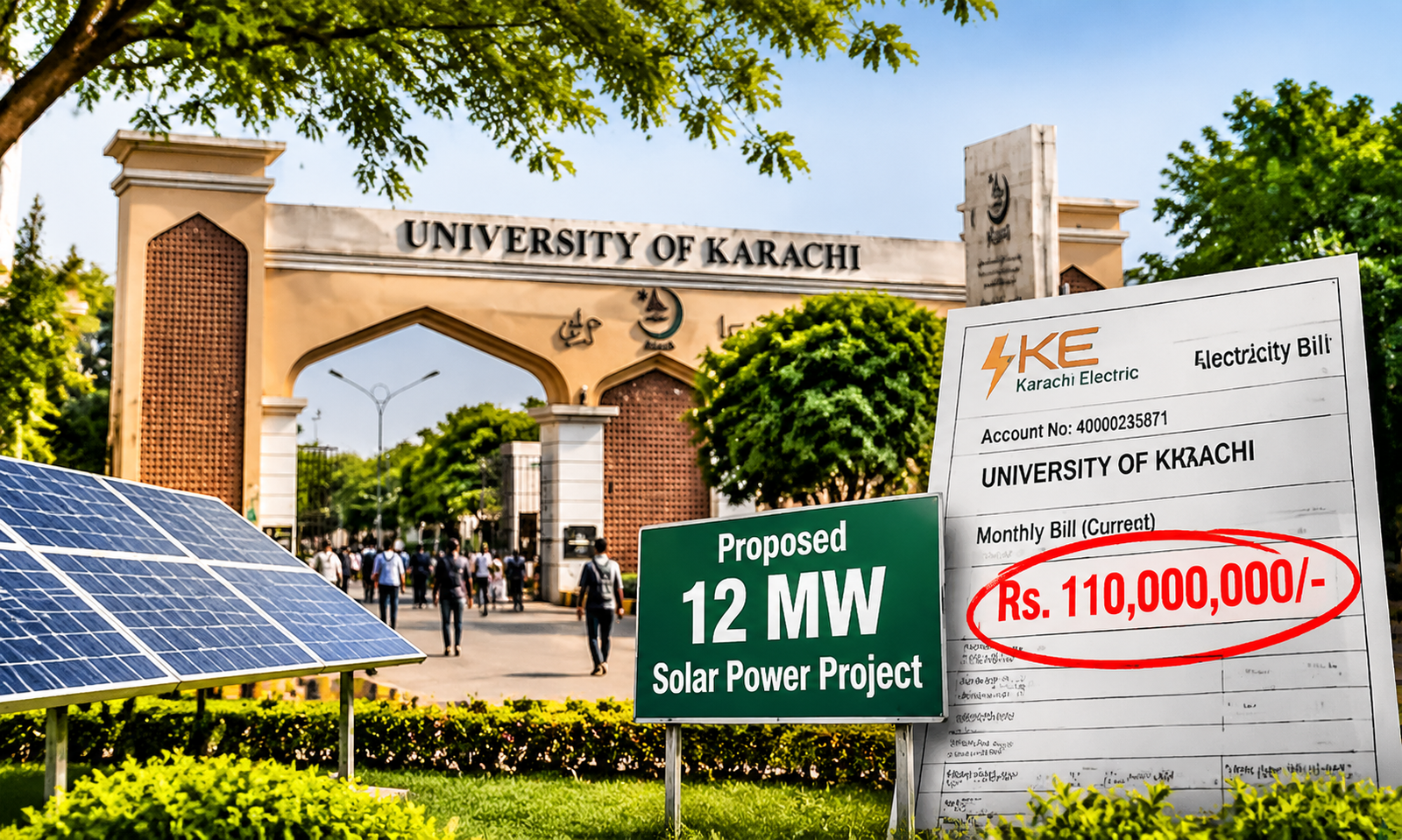
Vice Chancellor Reveals Massive Power Expenses as Karachi’s Largest Public University Seeks a 12MW Solar Project to Reduce Electricity Costs
KARACHI — November 5, 2026
Running a large public university is becoming increasingly expensive in Pakistan, and the University of Karachi is facing a major challenge as its monthly electricity bill has reached between Rs100 million and Rs110 million.
The rising electricity cost is putting additional pressure on the university’s finances at a time when public educational institutions already face several financial and administrative challenges.
The issue came to light when University of Karachi Vice Chancellor Professor Dr Wasim Qazi shared details about the institution’s growing financial difficulties.
His statement has brought fresh attention to the impact of expensive electricity on public universities and the money they need to keep their campuses running.
Karachi University Electricity Bill Reaches Rs110 Million
According to the Vice Chancellor, Karachi University’s monthly electricity bill is currently between Rs100 million and Rs110 million.
This is a major expense for an educational institution that must manage classrooms, laboratories, offices, research facilities and other campus services.
The university’s electricity consumption has also increased significantly.
Dr Wasim Qazi explained that the university’s sanctioned electricity capacity is only 1.8 megawatts, while its current electricity usage has reached 8.6 megawatts.
This difference highlights the growing energy requirements of the university and the financial pressure linked to its electricity consumption.
University of Karachi Plans 12MW Solar Power Project
To reduce its electricity expenses, the University of Karachi has taken a step towards solar energy.
According to the Vice Chancellor, the university has submitted a PC-I for a 12-megawatt solar power project to the Sindh Chief Secretary.
The proposed solar project is aimed at reducing the university’s dependence on conventional electricity and controlling its monthly energy costs.
If approved and implemented, the project could help the university manage its electricity expenses more effectively over the coming years.
Solar power could also provide a more sustainable energy option for a large campus with high daily electricity requirements.
However, the project is still at the proposal stage, and its approval and implementation will be important next steps.
Rising Electricity Costs Create Problems for Public Universities
The Karachi University electricity bill is part of a wider financial challenge facing educational institutions across Pakistan.
Public universities need electricity throughout the day to operate classrooms, computer laboratories, research centres, libraries and administrative departments.
When electricity costs increase, universities have to manage their limited budgets more carefully.
A large amount spent on electricity can reduce the money available for other important needs, including research, student facilities, campus maintenance and academic development.
For students, these financial pressures matter because a university needs proper facilities and resources to provide quality education.
University Faces Other Financial and Administrative Challenges
The Vice Chancellor also highlighted energy, security, financial and administrative problems facing the university.
He said these challenges require immediate attention and reforms to improve the institution’s overall performance.
Karachi University is one of Pakistan’s major public educational institutions, serving thousands of students from different parts of the country.
Managing such a large institution requires strong financial planning, reliable electricity and long-term investment in infrastructure.
The rising electricity bill has therefore become an important issue for the university’s future planning.
Solar Energy Could Bring Long-Term Relief
The proposed 12MW solar power project could become an important step towards reducing Karachi University’s energy expenses.
However, the project will need approval, funding and proper implementation before the university can benefit from it.
For now, the monthly electricity bill remains a major financial burden.
The situation highlights the need for better energy planning in Pakistan’s public education sector. Universities need reliable power to support education and research, but they also need affordable and sustainable ways to manage their operating costs.
Karachi University now faces an important task: controlling its rising electricity expenses while protecting the quality of education and research facilities available to its students.