


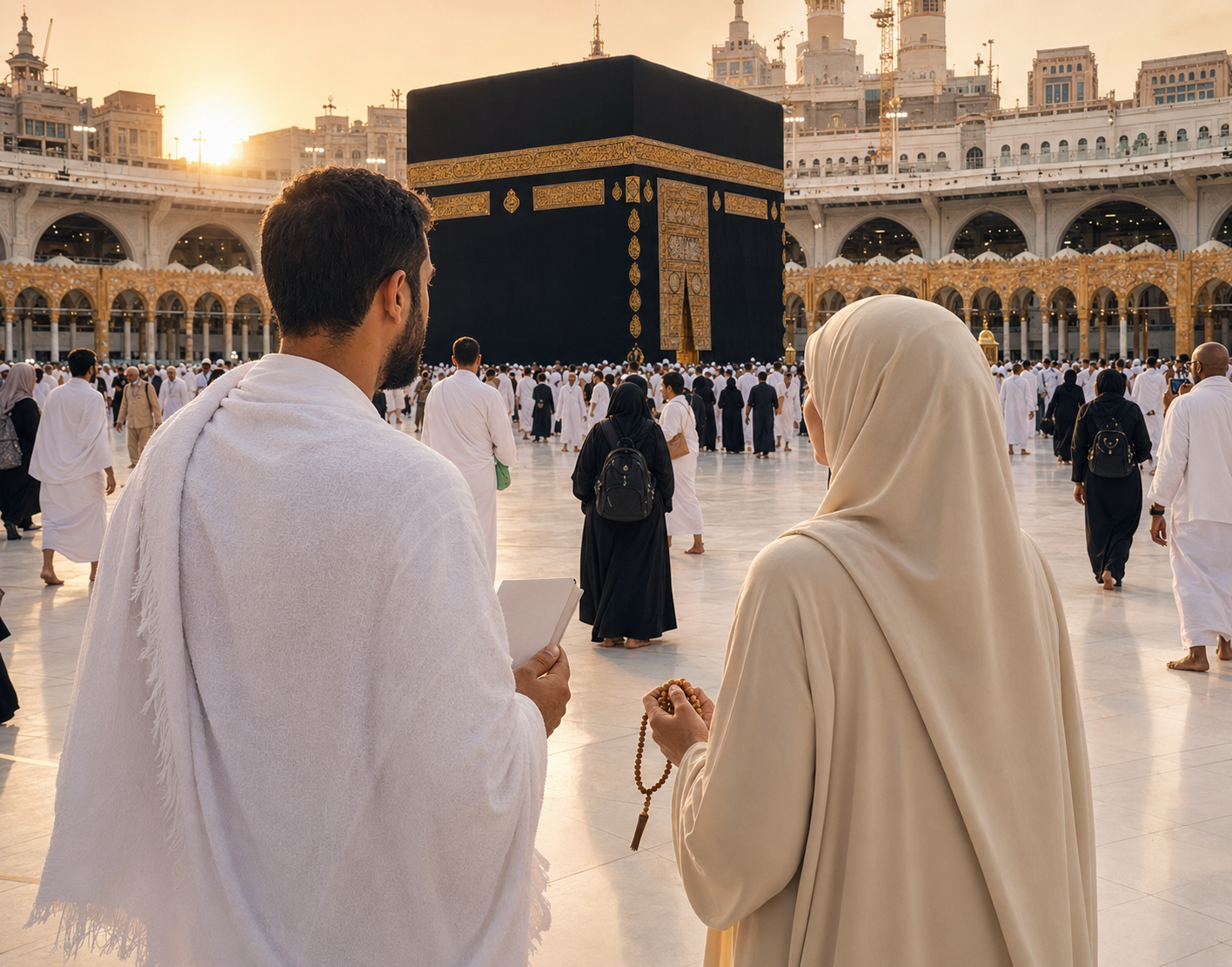
Performing Hajj for the first time can feel overwhelming because the pilgrimage involves several important rites, locations and practical preparations. Understanding the order of the major rituals before leaving home can help first-time pilgrims approach the journey with greater confidence and focus.
This Hajj Guidelines for Beginners guide explains the main stages of Hajj, from entering Ihram and reaching Mina to standing at Arafat, spending time in Muzdalifah, performing Jamarat and completing Tawaf and Sa’i.
Because Hajj arrangements, permits and official procedures can change, pilgrims should also follow the latest instructions from the relevant authorities and their authorized Hajj service provider.
What Is Hajj?
Hajj is the annual pilgrimage to Makkah and one of the Five Pillars of Islam. It is performed during specific days of Dhul-Hijjah and includes a series of prescribed acts of worship at Makkah and the sacred sites.
For a first-time pilgrim, understanding the basic sequence is more useful than trying to memorize everything at once. Your Hajj Pilgrimage Guide should therefore include both the religious rites and practical preparations needed for the journey.
Hajj Requirements for First-Time Pilgrims
Before traveling, pilgrims should confirm their eligibility, travel documents, official Hajj arrangements and any health requirements applicable to their country and the current Hajj season.
For the 1447 AH/2026 Hajj season, Saudi authorities emphasized that performing Hajj requires an official permit and that pilgrims must follow the approved procedures.
Requirements can vary depending on nationality, country-specific Hajj arrangements and the season. Pakistani pilgrims should follow the latest instructions issued through Pakistan’s official Hajj arrangements as well as Saudi authorities.
Essential Hajj Preparation Checklist
Good preparation can make a major difference during a physically demanding pilgrimage.
Your Essential Hajj preparation checklist should include:
- Valid travel and identification documents
- Official Hajj permit and approved arrangements
- Ihram clothing and essentials
- Comfortable walking footwear where appropriate
- Necessary medicines and health supplies
- Unscented personal-care products suitable for Ihram
- Mobile phone and charger
- Basic personal items
- Copies of important documents
- Emergency contact information
The Saudi Ministry of Hajj and Umrah’s awareness resources also provide dedicated Hajj guides and practical preparation material for pilgrims.
How to Perform Hajj Step by Step
The exact sequence can vary according to the type of Hajj being performed and details of the pilgrimage. First-time pilgrims should therefore follow the instructions of their qualified guide and the official authorities.
1. Enter Ihram and Make the Intention
Ihram marks the beginning of the sacred state for Hajj. The pilgrim makes the intention for Hajj and begins reciting the Talbiyah.
The Ministry of Hajj and Umrah’s official Ihram guide explains that the pilgrim enters the state of Ihram through intention and the Talbiyah. It also notes recommended preparation such as Ghusl before entering Ihram.
Men generally wear the prescribed two-piece Ihram clothing, while women observe the required modest dress according to Islamic guidance. Pilgrims should learn the relevant Ihram restrictions before beginning the rites.
2. Reach Mina
Mina is one of the sacred sites of Hajj. Pilgrims stay there during the relevant days of the pilgrimage, including the Day of Tarwiyah and the Days of Tashreeq according to the Hajj schedule and rite being performed.
The Ministry describes Mina as the sacred valley that houses the Jamarat and other important Hajj facilities.
For beginners, it is important to follow group instructions, remain hydrated and keep track of your accommodation and route because large crowds can make movement difficult.
3. Stand at Arafat
The Day of Arafah is one of the central moments of Hajj. Pilgrims gather at Arafat for worship, supplication and remembrance of Allah.
For someone learning How to Perform Hajj, this stage deserves particular attention because the gathering at Arafat is a defining part of the pilgrimage.
Use the time for sincere Dua, remembrance and reflection rather than becoming overly concerned with taking photographs or following social-media updates.
4. Travel to Muzdalifah
After Arafat, pilgrims proceed toward Muzdalifah. The stay there is part of the Hajj journey and is connected with worship, rest and preparation for the next stages.
Crowds can make transportation slow, so patience is essential. Follow the instructions of your Hajj group and local authorities rather than attempting to move independently through restricted or congested areas.
5. Perform Jamarat
One of the well-known rites of Hajj is the stoning of the Jamarat.
Pilgrims perform the prescribed stoning rites according to the Hajj schedule. The official Saudi Ministry provides a dedicated Jamarat guide for pilgrims, highlighting the importance of understanding the site and following safety and crowd-management instructions.
Do not push, rush or attempt to force your way through crowded areas. Your safety and the safety of other pilgrims are essential.
6. Complete the Remaining Major Rites
The Day of Sacrifice includes several major acts. Depending on the type of Hajj and the pilgrim’s circumstances, these can include Jamarat al-Aqabah, sacrifice, shaving or shortening the hair, and Tawaf al-Ifadah.
The Saudi Ministry’s current guidance for the Day of Sacrifice lists these major rites and explains their sequence.
Hajj Rituals and Their Meaning
The Hajj rituals and their meaning go beyond physical movement from one location to another. They represent obedience, worship, sacrifice, remembrance and submission to Allah.
Pilgrims should try to understand the purpose of each rite instead of treating Hajj as simply a checklist of activities.
7. Perform Tawaf and Sa’i
Tawaf involves circumambulating the Kaaba as prescribed. Pilgrims should learn the correct procedure before beginning and follow the guidance provided by qualified scholars or official Hajj guides.
Sa’i is performed between Safa and Marwah. The Saudi Ministry explains that pilgrims complete seven circuits between the two locations, beginning at Safa and ending at Marwah.
The Ministry also advises pilgrims to follow security personnel and assistants, particularly where crowding can create safety concerns.
Ihram Rules for Hajj
Understanding Ihram rules for Hajj is essential before beginning the pilgrimage.
The restrictions associated with Ihram are part of the sacred state and include matters concerning clothing, grooming, fragrance and other actions. Exact rules can differ in application depending on circumstances, and some issues have scholarly differences.
For this reason, pilgrims should study the rules from a trusted scholar or authorized Hajj guide before traveling rather than relying on social-media posts or unverified advice.
Hajj Packing List for Pilgrims
A practical Hajj packing list for pilgrims should focus on essentials rather than unnecessary items.
Consider packing:
- Appropriate Ihram clothing
- Comfortable personal clothing for permissible periods
- Unscented toiletries
- Required medicines
- Basic health supplies
- Phone and charger
- Identification and document copies
- Small personal bag
- Comfortable footwear
- Any items specifically required by your Hajj service provider
Avoid overpacking. You will already be managing movement, crowds and long periods of walking.
Important Tips for First-Time Pilgrims
Hajj is physically and emotionally demanding. Walk regularly before the journey if you are able, stay hydrated and rest whenever possible.
Keep your group contact details with you. Learn the location of your accommodation and identify meeting points in case you become separated from companions.
Most importantly, remain patient. Crowded conditions can test anyone’s patience, but kindness, calmness and consideration for other pilgrims are essential throughout the journey.
Conclusion
A good Hajj Guide for Beginners should make the pilgrimage easier to understand without reducing its spiritual purpose to a simple checklist.
Learn the major stages in advance: enter Ihram correctly, understand the movement between Mina, Arafat and Muzdalifah, perform the Jamarat rites as instructed, and learn the correct procedures for Tawaf and Sa’i.
Most importantly, verify current permits, travel arrangements and official instructions before departure. For religious details where scholars differ, seek guidance from a qualified and trusted scholar.
Hajj is a journey of worship, patience and devotion. Preparing properly can help first-time pilgrims spend less time worrying about logistics and more time focusing on the purpose of the pilgrimage.
Frequently Asked Questions
1. What should a beginner learn before performing Hajj?
A beginner should learn the basic sequence of Hajj, Ihram requirements, the major sacred locations, Tawaf, Sa’i, Jamarat and the key days of the pilgrimage. It is also important to understand current travel, permit and health requirements.
2. What is the basic Hajj step-by-step process?
The broad journey includes entering Ihram and making the intention, reaching Mina according to the Hajj schedule, standing at Arafat, proceeding to Muzdalifah, performing the relevant Jamarat rites, completing the sacrifice and hair-cutting rites where applicable, and performing the required Tawaf and Sa’i. The exact sequence depends on the type of Hajj being performed.
3. What should I pack for Hajj?
Pack Ihram clothing, appropriate personal clothing, unscented toiletries, required medicines, health supplies, identification documents, a phone charger and comfortable footwear. Keep the luggage practical because pilgrims may need to move frequently between locations.
4. What are the most important Ihram rules for Hajj?
Pilgrims should understand the restrictions associated with Ihram before entering the sacred state. These can involve clothing, fragrance, grooming and other actions. Because details can vary according to circumstances and scholarly interpretation, first-time pilgrims should seek guidance from a qualified scholar or official Hajj guide.
5. Do I need an official permit to perform Hajj?
Yes. Saudi authorities have emphasized that Hajj may only be performed by those holding the required official permit and following the approved procedures. Pilgrims should use authorized channels and verify the latest requirements before traveling.