

For a long time, Augmented Reality (AR) and Virtual Reality (VR) were viewed strictly through the lens of the video game industry—expensive toys designed for immersive, digital escapism. However, the true potential of these spatial computing technologies extends far beyond the living room. As hardware becomes lighter, cheaper, and vastly more powerful, AR and VR platforms are quietly gaining massive traction as critical enterprise tools.
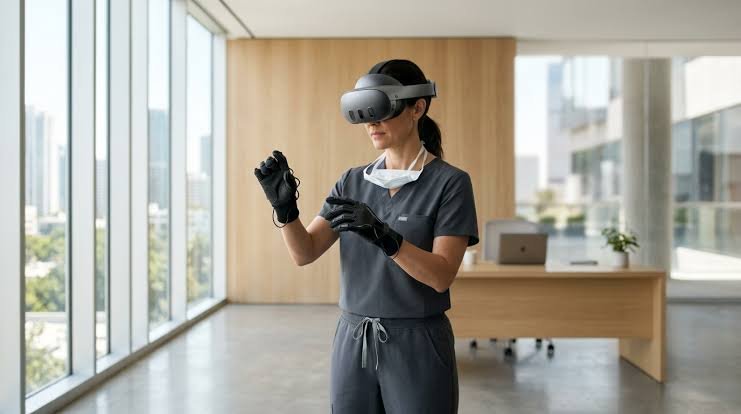
The most profound impact of immersive technology is being felt in the fields of education and professional training. Virtual reality allows organizations to train employees in highly dangerous, complex scenarios without any real-world risk. Medical students can now perform dozens of simulated, high-stakes surgeries in VR before ever touching a human patient, while aviation mechanics can practice disassembling massive jet engines in a completely safe, digital hangar.
Augmented reality, which overlays digital information directly onto the physical world, is revolutionizing industrial maintenance and retail. A factory technician wearing AR glasses can look at a broken piece of machinery and instantly see a digital overlay of the repair manual and real-time diagnostic data hovering above the equipment. In retail, AR allows consumers to visualize exactly how a piece of furniture will look in their living room or how a pair of glasses will fit their face before hitting the buy button.
As 5G networks eliminate latency and battery technologies improve, we will see these bulky headsets inevitably shrink into lightweight, stylish everyday eyewear. When digital information can be seamlessly overlaid onto our physical environment at all times, AR and VR will cease to be niche technologies and will instead become the primary interface through which we interact with the digital world.