

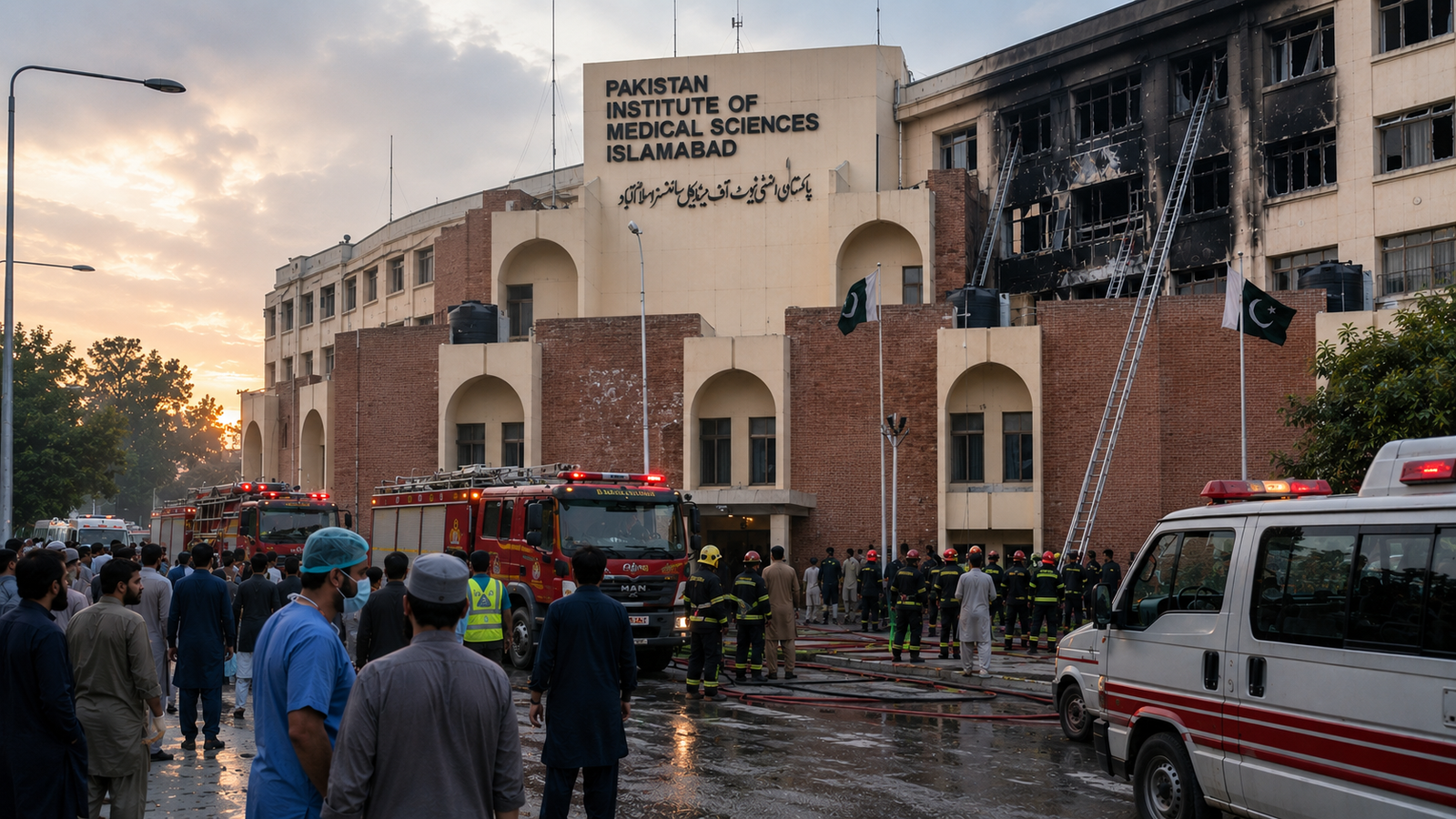
A hospital is supposed to be the place where a family feels safest. For the families of 14 newborn babies at the Pakistan Institute of Medical Sciences in Islamabad, that trust was shattered in a matter of minutes.
The fire that swept through the neonatal nursery at PIMS on August 26 has become one of Pakistan’s most painful recent hospital tragedies. Fourteen newborns lost their lives. Prime Minister Shehbaz Sharif ordered a high-level investigation and suspended the federal health secretary as authorities began examining what went wrong.
But an investigation into one hospital cannot be where this conversation ends.
The tragedy has raised a much larger question: how safe are Pakistan’s hospitals in the event of a fire?
A Hospital Fire Is Different
Fire safety matters in every public building, but hospitals present unique risks.
Patients may be unconscious, connected to medical equipment or physically unable to evacuate themselves. Neonatal units are particularly vulnerable because newborns depend entirely on medical staff for evacuation.
Hospitals also contain oxygen systems and electrical equipment that can make a fire far more dangerous.
That means functioning alarms, accessible emergency exits, fire-resistant infrastructure, sprinklers, extinguishers and trained staff are not optional extras. They are basic parts of patient safety.
In the aftermath of the PIMS fire, witnesses raised troubling questions about access and emergency exits. An official fire report subsequently cited inadequate safety arrangements and locked or obstructed exits.
These findings deserve careful investigation before final responsibility is assigned. But they also expose why routine safety inspections matter.
Inspections Cannot Become Paperwork
Pakistan does not need to wait for another tragedy to inspect its hospitals.
Every major public and private healthcare facility should undergo a comprehensive fire-safety audit. Authorities need to determine whether emergency exits actually open, whether alarms work, whether extinguishers are operational and whether staff know what to do when smoke fills a ward.
An emergency exit that exists on a building plan but is locked during an emergency is not an emergency exit.
Reports that PIMS lacked a fire-safety NOC have made the regulatory questions even more serious. Investigators must establish not only what happened inside the nursery, but how the country’s regulatory and inspection systems allowed any critical safety deficiencies to persist.
Accountability Must Lead to Reform
Suspensions and inquiry committees may be necessary after a disaster, but accountability should not end with finding individuals to blame.
Pakistan needs a national hospital fire-safety framework with regular independent inspections, mandatory evacuation drills and special protocols for intensive care units, neonatal wards and operating theatres.
Inspection results should be documented, deadlines should be given for correcting violations, and hospitals that fail basic safety requirements should face consequences.
Following the PIMS tragedy, Punjab has already ordered a review of fire-safety arrangements at health facilities. That should become a nationwide exercise.
Fourteen families have suffered a loss that no inquiry can reverse.
The responsibility now is to ensure that their tragedy forces lasting change — not another investigation whose recommendations are forgotten once public attention moves elsewhere.
Hospitals exist to save lives. Their buildings, systems and safety culture must be designed to protect them too.