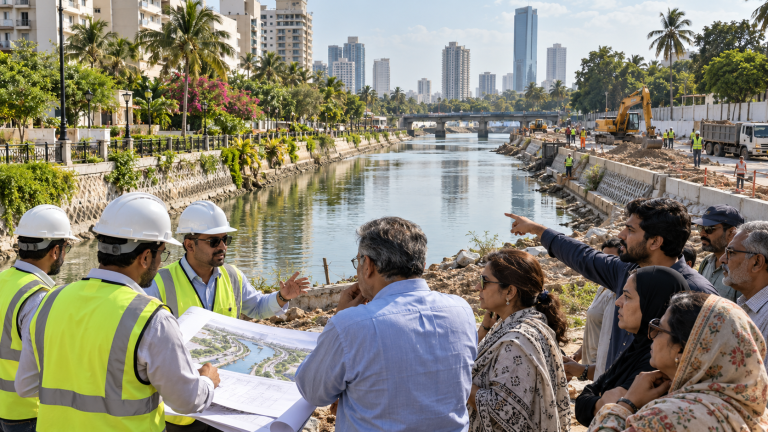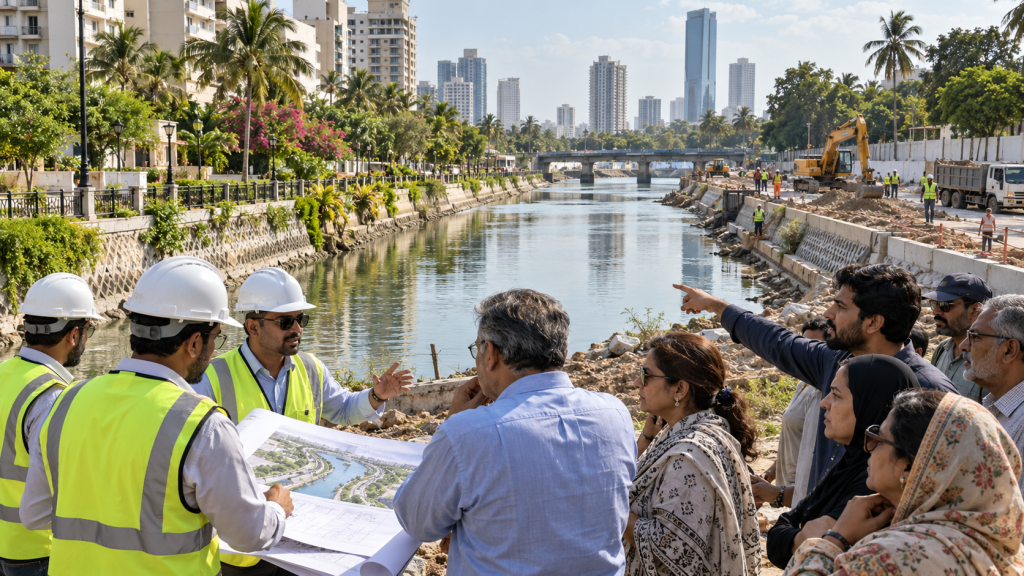


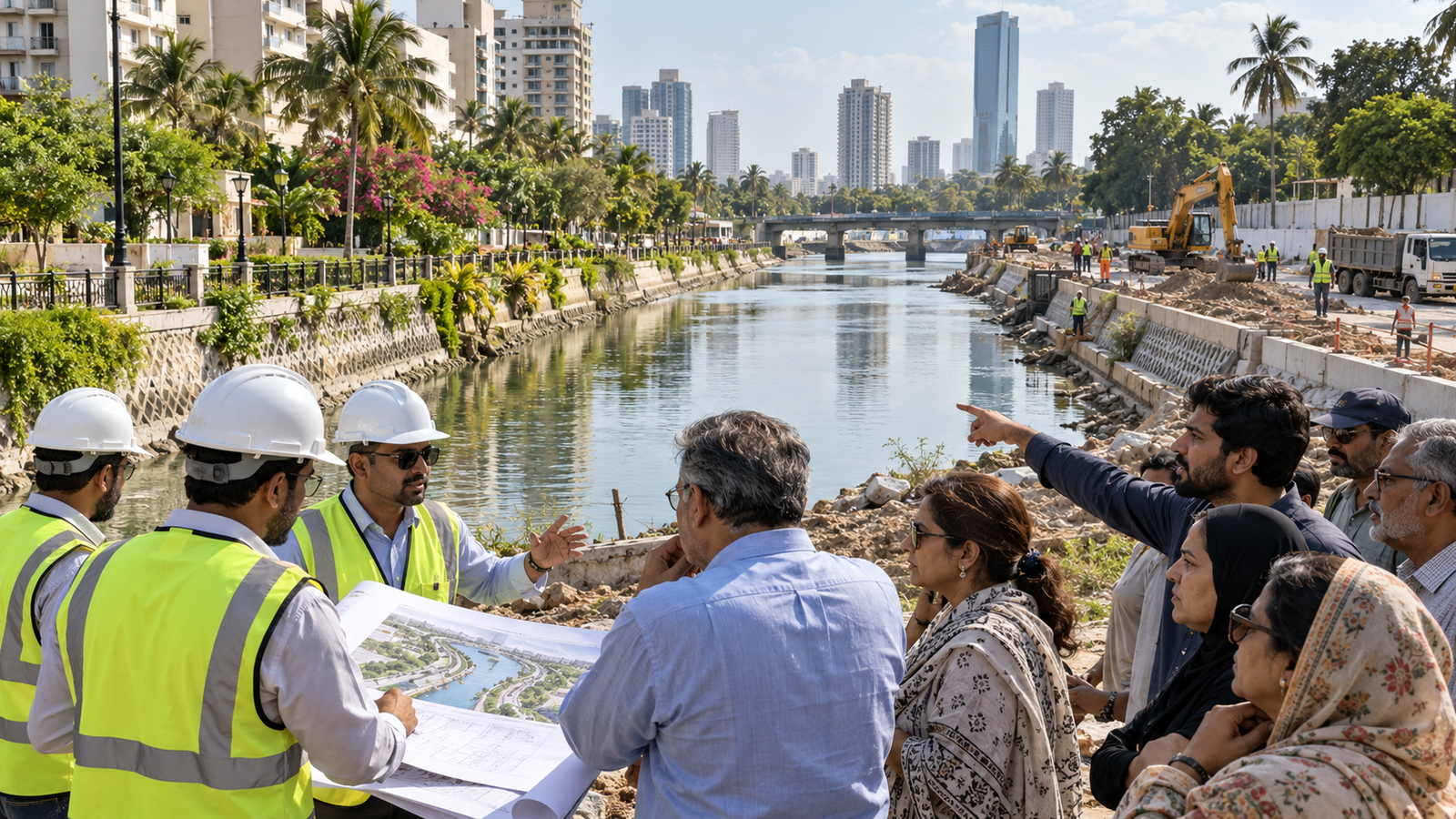
A rehabilitation project at Karachi’s Nehr-e-Khayyam has become the subject of growing public debate, bringing questions about drainage, environmental protection, and urban development into focus. The waterway in Clifton is at the centre of a disagreement between authorities seeking to improve its condition and residents who want clearer answers about the construction taking place along its banks.
On October 27, 2026, Dawn reported that the Sindh government had approached the Sindh Environmental Protection Agency (SEPA) to examine the project and identify the environmental safeguards, approvals, and mitigation measures required under applicable laws. The request followed weeks of protests by residents and environmental activists.
What the Government Says the Project Will Achieve
The scheme, titled Rehabilitation of Nehr-e-Khayyam Including Diversion of Sewerage Water (District South), is intended to improve drainage and address sewage contamination in the surrounding area.
According to the Local Government Department, the proposed work includes rehabilitating approximately one kilometre of the existing drain, constructing another kilometre of sewerage line, and installing a multi-cell box drain.
Officials say the project aims to reduce stagnant water, improve environmental hygiene, and support better stormwater movement. They have also referred to future possibilities involving greywater treatment, plantation, and public recreation.
These objectives address problems that Karachi residents know well. Poor drainage, untreated sewage, and unpleasant odours affect neighbourhoods across the city. A project that genuinely tackles these issues could bring meaningful improvements to the local environment.
However, the effectiveness of any rehabilitation scheme depends on its engineering design, implementation, and long-term maintenance.
Why Residents Are Raising Questions
Residents of Clifton, environmentalists, and civic groups have questioned whether the current construction could narrow the waterway and affect its ability to carry rainwater during heavy rainfall.
Their concern is practical. Karachi already faces drainage challenges during the monsoon, and residents fear that reducing the channel’s effective capacity could increase the risk of water accumulation and urban flooding.
They have also raised concerns about the possible commercial use of land around the waterway. Some fear that construction could eventually support shops or a food street, although the provincial government has stated that commercial activity is not part of the proposed plan.
Residents have requested the publication of detailed project documents, approved engineering drawings, cost information, and environmental assessments. They have also called for an independent drainage study and greater public consultation.
These demands reflect a broader question: how can citizens assess a project properly if its technical details are not readily available?
Why SEPA’s Review Matters
SEPA’s involvement creates an opportunity to examine the project beyond its stated objectives. The agency has been asked to identify the environmental requirements and safeguards that should apply.
A thorough review should consider the waterway’s drainage capacity, the handling and diversion of sewage, potential effects on the surrounding environment, and measures needed to prevent pollution. The relevant approvals and technical findings should also be communicated clearly to the public.
Importantly, the request for an environmental review does not itself establish that the project has violated environmental laws. Equally, the government’s stated intentions do not remove the need for independent scrutiny.
Balancing Development With Environmental Protection
Karachi needs infrastructure that improves sanitation without creating new environmental or drainage problems. Residents deserve cleaner surroundings, while public authorities need the freedom to address long-standing civic failures through sound engineering.
The challenge is to demonstrate that both goals can be achieved together. Publishing the plans, explaining the design decisions, and responding directly to community concerns would help build public confidence.
As SEPA examines the Nehr-e-Khayyam scheme, the focus should remain on evidence, transparency, and measurable environmental benefits. A successful rehabilitation project should not simply change the appearance of a waterway; it should improve its function, protect the surrounding environment, and serve the people who live nearby.