

October 14, 2026.
PTI Takes Major Legal Action Against KP Emergency
Pakistan Tehreek e Insaf has taken a major legal step against the federal government after challenging the emergency and governor’s rule in Khyber Pakhtunkhwa before the Peshawar High Court.
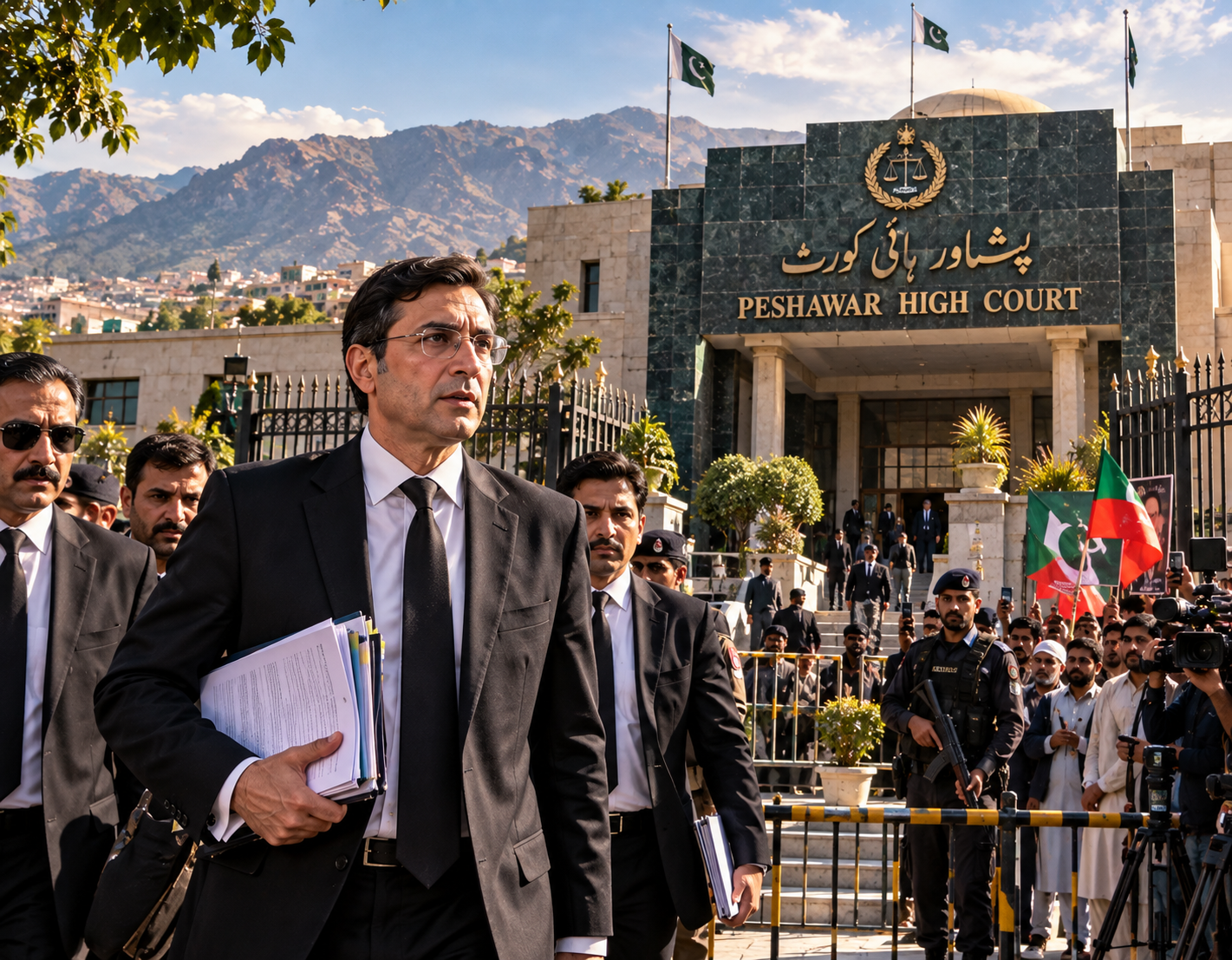
On October 14, 2026, PTI Chairman Barrister Gohar Ali Khan filed a constitutional petition seeking the removal of the emergency measures and the restoration of the elected provincial government.
The move has created a new legal and political battle between PTI and the federal government led by Prime Minister Shehbaz Sharif.
The biggest question now is whether the court has the power to reverse the decision and restore the previous system of government in the province.
Why Did PTI Challenge Governor’s Rule in KP?
The federal government imposed emergency measures and governor’s rule in Khyber Pakhtunkhwa on October 11, 2026, following growing security concerns and political disagreements with the provincial leadership.
President Asif Ali Zardari approved the decision on the advice of the federal government.
The government defended the move by pointing to the worsening security situation, terrorism concerns and disagreements over cooperation between federal and provincial authorities.
However, PTI strongly rejected these reasons.
The party believes that the decision was politically motivated and aimed at removing its elected provincial government from power.
PTI leaders argue that security problems should be addressed through cooperation between institutions rather than weakening an elected administration.
Barrister Gohar Files Petition in Peshawar High Court
Barrister Gohar Ali Khan formally challenged the emergency measures through an 86 page constitutional petition.
The petition was submitted by Advocate Shah Faisal Ilyas on behalf of the PTI chairman.
According to reports, the party has asked the court to declare the federal government’s actions unconstitutional and restore the elected government.
Barrister Gohar said that removing a government chosen by the people through extraordinary constitutional powers was unacceptable.
He expressed confidence that the judiciary would protect democratic rights and provincial independence.
PTI has also requested an early hearing because the decision directly affects the political and administrative future of Khyber Pakhtunkhwa.
However, filing a petition does not automatically suspend the emergency measures. The court must first consider the legal arguments and decide whether any relief can be granted.
What Does Article 232 of Pakistan’s Constitution Say?
Article 232 allows the President of Pakistan to declare an emergency under specific constitutional conditions.
These include war, external aggression or serious internal disturbances that a provincial government cannot control.
However, the Constitution also places important limits on how these powers can be used.
For an emergency based on internal disturbances, the provincial assembly’s approval is important.
If the provincial assembly does not support the proclamation, approval from both houses of Parliament is required within the constitutional time limit.
This requirement could become an important part of PTI’s legal challenge.
The court may need to examine whether the conditions for declaring an emergency were actually present and whether the required procedures were followed.
What Is Article 234 and How Does Governor’s Rule Work?
Article 234 deals with a situation in which a provincial government cannot be run according to the Constitution.
Under this provision, the President may authorise the Governor to exercise certain powers of the provincial government.
The powers of the provincial assembly may also be exercised by Parliament under the constitutional arrangement.
However, this does not mean that the elected provincial assembly is automatically dissolved.
The Constitution also protects the powers and functioning of the High Court.
Governor’s rule normally requires parliamentary approval to continue beyond two months and cannot remain in force for more than six months under Article 234.
These limits are important because they prevent extraordinary federal control from continuing without constitutional checks.
Can the Peshawar High Court Reverse the Emergency?
This is the most important legal question in the current political dispute.
Some constitutional lawyers believe that the court can examine whether the federal government followed the Constitution when imposing emergency measures.
They argue that extraordinary powers cannot be used simply because the federal and provincial governments have political disagreements.
If the required constitutional conditions were missing, PTI could argue that the decision was unlawful.
However, other legal experts believe the federal government has a strong defence.
Article 236 contains a provision that restricts courts from questioning the validity of emergency proclamations.
This creates a serious legal challenge for PTI.
Some lawyers argue that courts may still examine actions taken without lawful authority or for improper purposes.
Others believe that the constitutional restriction significantly limits judicial intervention.
As a result, the outcome is uncertain and will depend on how the court interprets these constitutional provisions.
What Arguments Could the Federal Government Present?
The federal government is expected to defend its decision by focusing on security and constitutional responsibilities.
Prime Minister Shehbaz Sharif has criticised the PTI leadership over its handling of security challenges in Khyber Pakhtunkhwa.
The government has argued that stronger measures became necessary because cooperation with the provincial administration was not producing the required results.
Its legal position could focus on whether the situation had become serious enough to justify federal intervention.
Government lawyers may also rely on the constitutional protections available to presidential proclamations.
However, the government would still face questions about the evidence supporting its decision and the procedures followed.
The final legal position will become clearer when the court examines the petition and the government’s response.
What Happens If PTI Wins the Court Case?
If the court accepts PTI’s arguments and grants effective relief, it could open the way for restoring the elected provincial administration.
Such a decision would be a major political victory for PTI and could affect how emergency powers are used in Pakistan in the future.
However, any ruling may face further legal challenges.
The case could eventually reach the Federal Constitutional Court through the available appeal process.
A final outcome may therefore take longer than PTI supporters expect.
Even if the emergency measures are lifted, cooperation between federal and provincial institutions would remain necessary to address security problems.
What Happens If the Court Rejects PTI’s Petition?
If the court dismisses the petition, the emergency arrangements could continue within the limits set by the Constitution.
PTI would still have the option of pursuing further legal remedies where available.
The party could also continue its political opposition through Parliament, public statements and peaceful democratic activities.
However, continued political conflict could make cooperation between Islamabad and Peshawar more difficult.
The government would remain responsible for showing that the extraordinary measures are helping improve security and administration.
How Could This Case Affect Democracy in Pakistan?
The legal dispute is about much more than the future of one provincial government.
It raises important questions about provincial rights, elected representation and the limits of federal authority.
Pakistan’s Constitution gives the federal government certain emergency powers, but those powers are intended for exceptional circumstances.
Legal experts have warned that using extraordinary measures during political disagreements could create difficult questions for future governments.
At the same time, the federal government has a responsibility to protect citizens and respond to serious security threats.
Finding the right balance between national security and democratic rights will be central to this case.
What Does the KP Emergency Mean for Ordinary People?
For the people of Khyber Pakhtunkhwa, the political and legal dispute creates uncertainty about how the province will be governed.
Residents are already dealing with concerns about terrorism, employment, education, healthcare and economic opportunities.
Many people want stronger security, but they also expect elected representatives to remain accountable for public services.
A long political dispute could delay important decisions and make administrative cooperation more difficult.
The public will ultimately judge the situation by whether peace improves, services continue and daily life becomes safer.
Conclusion, Can PTI Restore Its Government Through the Courts?
PTI’s decision to challenge the KP emergency marks an important moment in Pakistan’s political and constitutional history.
Barrister Gohar’s petition has brought the dispute directly before the judiciary, where the legality of the federal government’s actions may face close examination.
The case presents difficult legal questions because the Constitution gives emergency powers to the federal government while also protecting provincial rights and democratic institutions.
PTI believes the measures were unconstitutional, while the federal government maintains that security concerns justified stronger action.
Neither position automatically determines the legal outcome.
The court’s ability to intervene, the constitutional requirements and the evidence presented by both sides will play a major role in deciding what happens next.
For Pakistan, the case could become an important test of how constitutional powers are used during political and security crises.
For the people of Khyber Pakhtunkhwa, the biggest hope is that the dispute ends through lawful means and that peace, stability and public welfare remain the highest priorities.
The coming court proceedings will help determine whether PTI can regain control of the provincial administration or whether the emergency arrangements will continue.