

October 14, 2026.
Saudi Arabia Faces Growing Security Challenges
Saudi Arabia is facing one of its biggest security and economic challenges in recent years as fresh missile and drone attacks raise serious concerns about the future of its ambitious Vision 2030 plan.
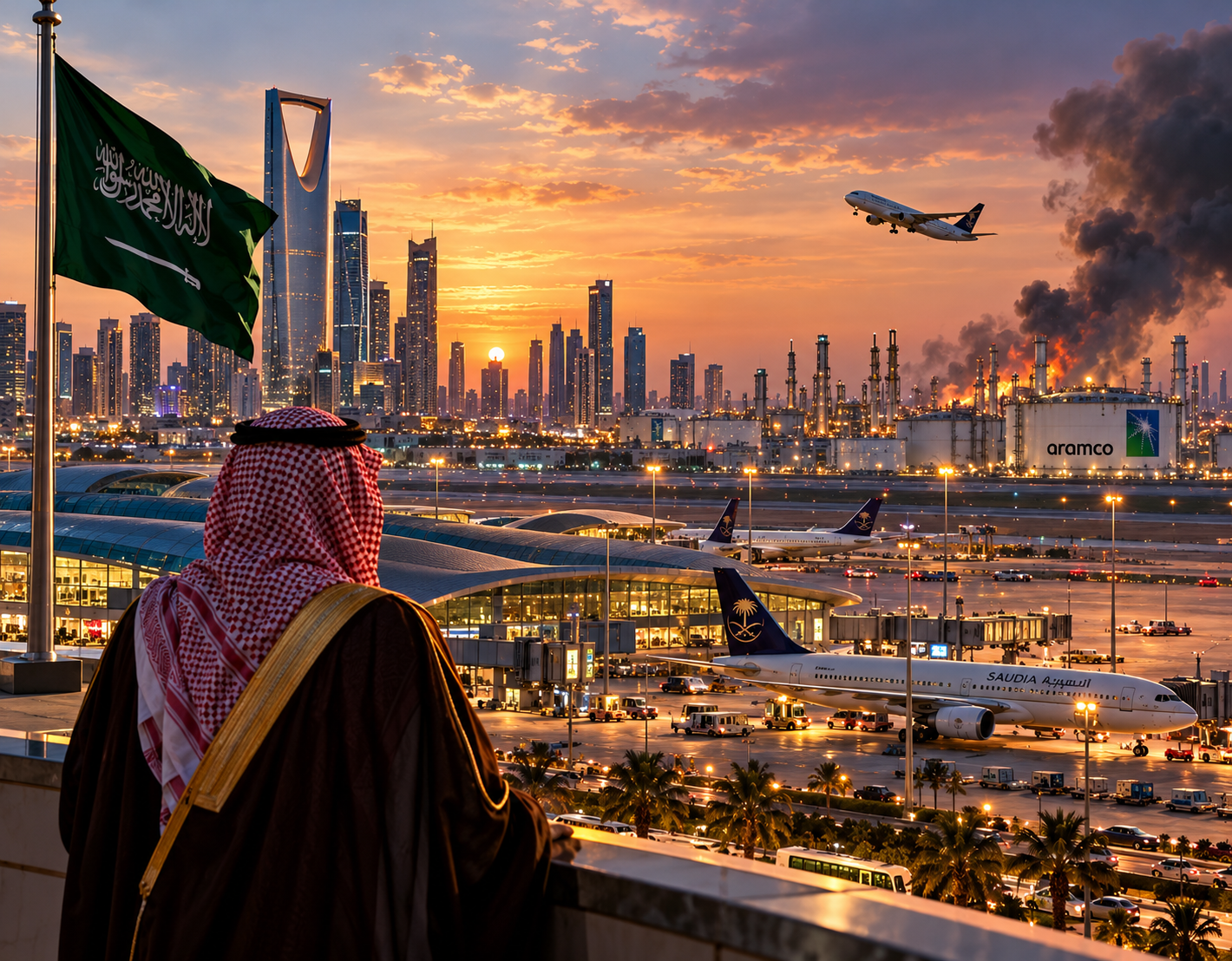
Recent attacks targeting airports, oil facilities and important infrastructure have brought new attention to the security situation in the Kingdom. These developments come at a time when Saudi Arabia is working to become a global centre for tourism, business, technology and foreign investment.
The biggest question is whether these attacks could slow down Saudi Arabia Vision 2030 and affect the country’s long term economic plans.
What Happened in Saudi Arabia in October 2026?
The latest tensions increased after Houthi forces from Yemen launched attacks against Saudi targets.
On October 10, an attack on King Khalid International Airport in Riyadh killed at least 13 people and injured hundreds of others, according to reports.
Further attacks and security warnings affected aviation operations, forcing several international airlines to cancel or change flights.
On October 13, Saudi authorities confirmed that an administrative building belonging to Saudi Aramco in Dhahran was targeted. A limited fire broke out, but no injuries or deaths were reported.
On October 14, Houthi forces warned that attacks on Saudi airports and energy facilities could continue.
These developments have raised concerns about the safety of important economic and transport centres across the country.
Why Is Saudi Vision 2030 So Important?
Saudi Vision 2030 is an ambitious economic development programme introduced in 2016 under the leadership of Crown Prince Mohammed bin Salman.
Its main goal is to reduce the country’s dependence on oil and build a stronger economy through tourism, entertainment, technology, industry and international investment.
The programme includes major developments such as NEOM, The Red Sea Project, Qiddiya and large transport and infrastructure projects.
Saudi Arabia also wants to strengthen its position as a global destination for international events, business conferences and major sporting competitions.
The Kingdom is preparing to host Expo 2030 in Riyadh and the FIFA World Cup in 2034.
These projects require billions of dollars in investment, international partnerships and a stable business environment.
How Can Attacks Affect Foreign Investment in Saudi Arabia?
Foreign investment is one of the most important parts of Saudi Arabia’s economic transformation.
International companies invest money where they see strong business opportunities, reliable infrastructure and long term stability.
When airports, oil facilities or important cities face repeated security threats, investors may become more careful.
Some companies could delay new projects, increase security spending or demand higher returns before investing.
This does not mean international investors will immediately leave Saudi Arabia.
The Kingdom still has major financial resources, strong government support and one of the largest economies in the Middle East.
However, continued uncertainty could make it more difficult to attract new investment at the speed needed for its development plans.
Saudi Tourism Industry Faces a New Test
Tourism is another major part of Saudi Arabia’s future economy.
The Kingdom aims to attract 150 million domestic and international visits annually by 2030.
Millions of people already travel to Saudi Arabia for Hajj, Umrah, business and tourism.
The government is also developing luxury resorts, entertainment destinations, historical attractions and modern hotels.
However, tourists need confidence that airports, hotels and transport systems are safe.
Recent security incidents have already affected international flight operations.
If the situation continues, some visitors may postpone holidays, while airlines and travel companies could face additional costs.
Religious travel remains especially important because millions of Muslims from Pakistan and other countries visit Makkah and Madinah every year.
Any major disruption to aviation could create difficulties for passengers, travel operators and the wider hospitality industry.
Why Are Saudi Aramco and Oil Facilities Important?
Saudi Aramco is one of the world’s most important energy companies and plays a major role in the Saudi economy.
Oil exports continue to provide significant government income, helping finance infrastructure, public services and national development projects.
Attacks against energy facilities create concerns about production, transportation and global oil supplies.
Even when physical damage is limited, repeated threats can increase uncertainty in international energy markets.
Shipping routes are also important.
The Red Sea and Bab el Mandeb Strait connect major international trade routes, making regional security essential for Saudi exports and global business.
Long term disruptions could increase shipping and insurance costs and make trade more difficult.
Can Regional Conflict Affect the Saudi Economy?
Saudi Arabia’s economic future is closely connected to stability across the Middle East.
Tensions involving Yemen, Iran and other regional powers can create challenges for international trade, transport and investment.
The International Monetary Fund has warned that continued regional tensions could delay investment decisions and make economic development more difficult.
Saudi Arabia also faces the challenge of balancing government spending with the need to protect its financial position.
If security costs increase while business activity slows, the government may need to review the timing of some development projects.
However, Saudi Arabia has important financial advantages, including its Public Investment Fund, foreign reserves and relatively low government debt.
These resources can help the country manage short term economic pressure.
What Is Saudi Arabia Doing to Protect Its Future?
Saudi authorities have continued to emphasise that their economic development plans will move forward despite the security situation.
Energy Minister Prince Abdulaziz bin Salman has stressed the importance of continuing investment and maintaining progress under Vision 2030.
The government is also working to strengthen security, protect important infrastructure and maintain confidence among international partners.
Improving air defence systems, protecting airports and maintaining reliable transport services will be especially important.
At the same time, diplomatic efforts to reduce regional tensions could play a major role in protecting the country’s long term economic interests.
What Does This Mean for Pakistan?
Pakistan has strong economic, religious and employment connections with Saudi Arabia.
Millions of Pakistanis work in the Kingdom and send money home to support their families.
Saudi Arabia is also an important destination for Pakistani pilgrims, business travellers and workers.
Any long term slowdown in the Saudi economy could affect employment opportunities, business activity and future investment.
Flight disruptions could also create problems for Pakistani passengers travelling for Umrah, work and family visits.
However, there is currently no clear evidence that the latest attacks will cause a major long term reduction in Pakistani employment or remittances.
Conclusion, Can Saudi Arabia Still Achieve Vision 2030?
Saudi Arabia is facing a serious test at a critical moment in its economic transformation.
The recent attacks have shown that regional security remains an important challenge, even as the Kingdom continues building new cities, attracting international companies and expanding tourism.
The biggest danger is not necessarily the immediate damage caused by individual attacks.
It is the possibility that repeated security threats could weaken investor confidence, increase business costs and delay important development projects.
However, Saudi Arabia still has the financial strength, international partnerships and economic resources needed to continue its transformation.
The future of Vision 2030 will depend on how effectively the Kingdom protects its infrastructure, restores confidence and manages regional tensions.
For now, the programme remains active, but the latest developments show that economic success and national security are closely connected.
Saudi Arabia’s greatest challenge will be proving that it can remain a safe, stable and attractive destination for the world while continuing its journey towards Vision 2030.