

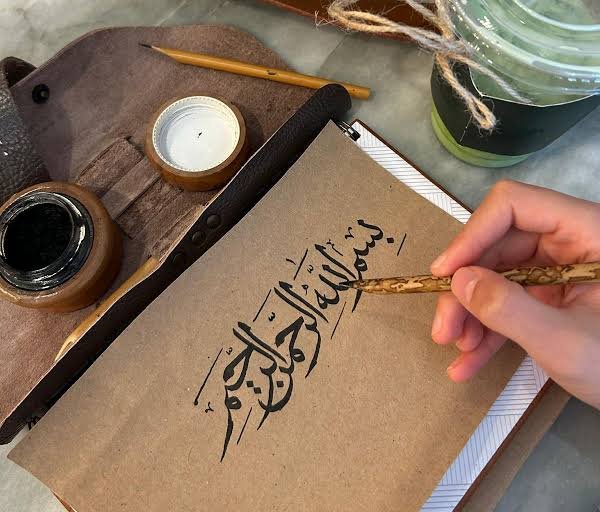
Because Islamic theology strictly discourages the creation of imagery depicting human or animal figures to prevent idolatry, Muslim artisans channeled their creative genius into other avenues. The most prominent and celebrated of these is Islamic calligraphy. The practice of transforming the written word into high art began as a way to preserve and honor the text of the Quran, but it quickly evolved into a profoundly sophisticated visual language that defines Islamic aesthetics globally.
Calligraphy is much more than just beautiful handwriting; it is a discipline governed by strict mathematical proportions and geometric rules. Over the centuries, several distinct scripts emerged. The angular, bold Kufic script is often seen in early manuscripts and monumental architecture, while the elegant, sweeping Thuluth and the highly readable Naskh scripts dominate later decorative arts and modern print. Each script requires years of rigorous apprenticeship to master.
For the calligrapher, the act of writing is a form of deep spiritual meditation. The slow, deliberate stroke of the reed pen on paper is considered an act of worship, requiring absolute focus, patience, and physical control. The beauty of the final piece is intended to reflect the divine beauty of the words themselves, elevating the viewer’s mind toward spiritual contemplation.
Today, Islamic calligraphy is experiencing a dynamic modern renaissance. Contemporary artists are breaking traditional boundaries, blending classical scripts with abstract expressionism, graffiti (often termed “calligraffiti”), and digital design. Whether it is carved into the walls of an ancient palace or painted on a canvas in a modern gallery, Islamic calligraphy remains a powerful, visually stunning bridge between faith and artistic brilliance.