

There was a period in the late 2000s and 2010s where Hollywood believed that computer-generated imagery (CGI) had entirely solved filmmaking. Massive blockbusters were shot almost exclusively inside empty green screen warehouses, with environments, creatures, and even costumes added later by visual effects artists. However, this total reliance on digital effects eventually led to a distinct aesthetic numbness, with audiences growing tired of weightless, cartoonish action sequences.
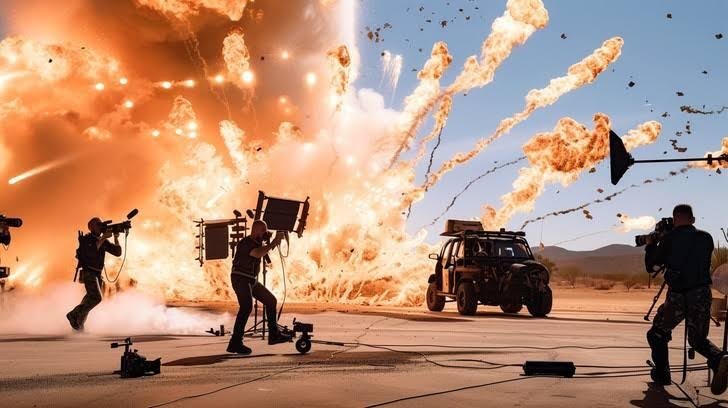
In response, a massive creative correction is taking place. The world’s top directors are actively spearheading a major return to practical special effects. This means building massive, physical sets, utilizing intricate animatronics, orchestrating real pyrotechnic explosions, and performing dangerous stunts using real human daredevils whenever possible.
The benefits of practical effects are immediately apparent to the human eye. There is an organic physics to real fire, dust, and debris that digital algorithms still struggle to replicate flawlessly. Crucially, shooting on location or on a physical set dramatically improves the performances of the actors. It is significantly easier for a performer to convey genuine terror or awe when they are looking at a real, ten-foot animatronic monster rather than a tennis ball taped to a green stick.
This practical movement is not about completely erasing CGI, but rather utilizing it as an invisible tool to enhance reality rather than replace it. Digital artists are now tasked with digitally painting out safety wires, cleaning up background elements, and expanding the horizons of real landscapes. By grounding the camera in physical reality, modern filmmakers are successfully restoring a profound sense of weight, danger, and magic to the cinema experience.