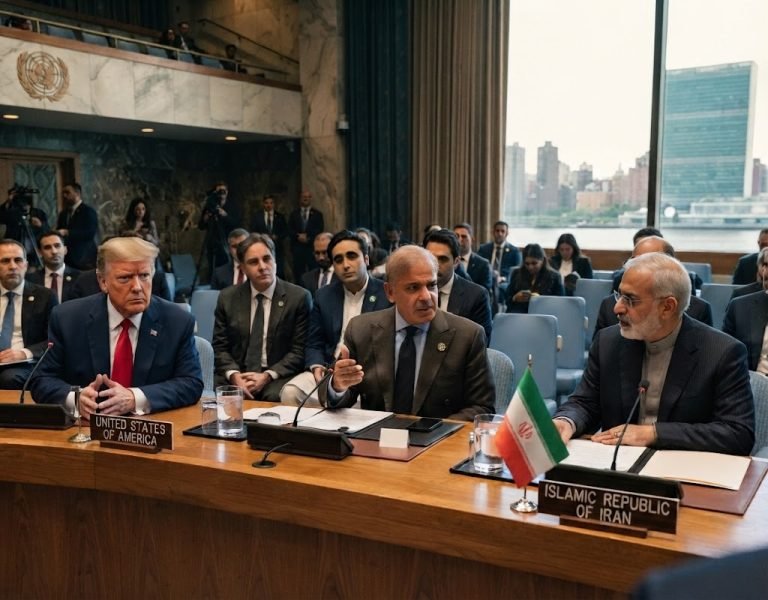


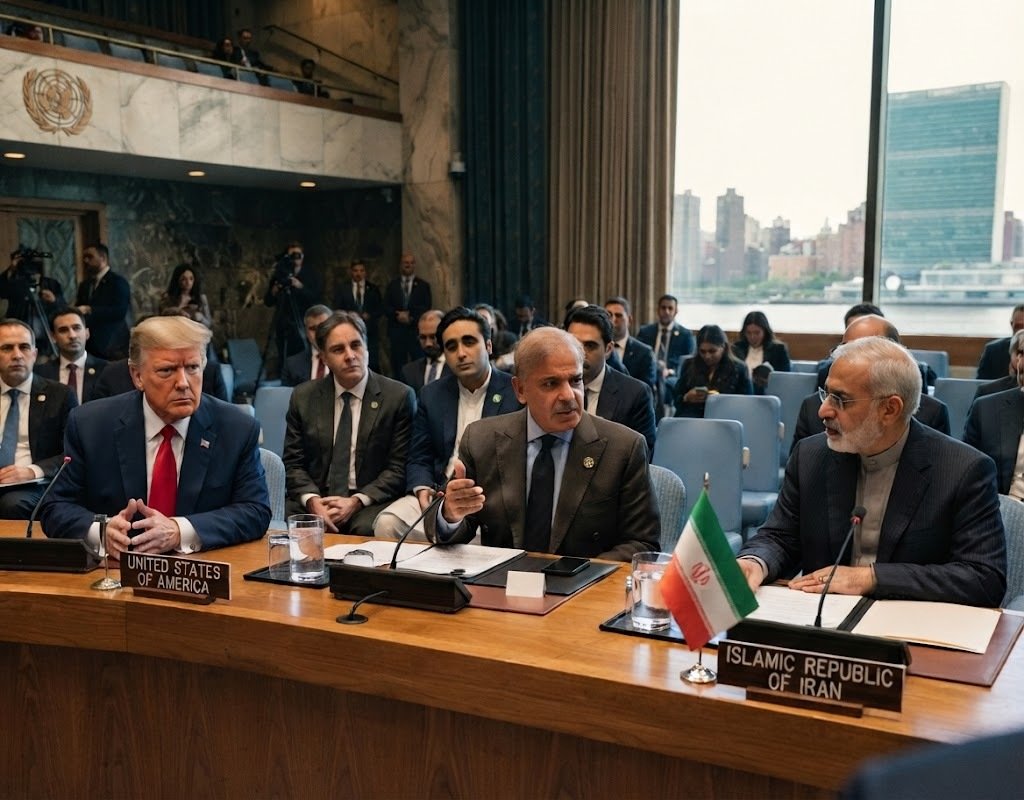
NEW YORK: Pakistan is stepping up diplomatic efforts to help revive dialogue between the United States and Iran, with Prime Minister Shehbaz Sharif holding talks with Iranian President Masoud Pezeshkian on the sidelines of the United Nations General Assembly in New York on September 24.
The meeting comes as tensions between Washington and Tehran continue and diplomatic efforts seek to prevent the situation from deteriorating further. Pakistan has been using its longstanding ties with both countries to encourage dialogue.
PM Shehbaz Meets Iranian President
Prime Minister Shehbaz Sharif met President Masoud Pezeshkian during the 81st session of the United Nations General Assembly. According to Pakistan’s Prime Minister’s Office, the two leaders discussed Pakistan-Iran relations and the wider regional situation.
The meeting also included Pakistan’s Deputy Prime Minister and Foreign Minister Ishaq Dar, Defence Minister Khawaja Asif and Special Assistant to the Prime Minister Tariq Fatemi. Iranian Foreign Minister Abbas Araghchi was also present.
The engagement came as Islamabad continued efforts to bring Washington and Tehran back towards negotiations.
Pakistan Pushes for Islamabad MoU
During the meeting, Prime Minister Shehbaz Sharif stressed the importance of implementing the Islamabad Memorandum of Understanding, a 14-point interim framework signed by the United States and Iran in June.
Pakistan had played a mediating role in facilitating the agreement. However, tensions have continued, including sporadic strikes and a US naval blockade of Iranian ports.
Following his meeting with Pezeshkian, PM Shehbaz said the Iranian president considered the Islamabad MoU fully acceptable to Tehran and was ready to take it forward.
Why Is Pakistan Involved?
Pakistan has diplomatic relationships with both Washington and Tehran, giving Islamabad channels of communication with both sides.
Pakistan also shares a long border with Iran and has repeatedly called for regional stability and diplomatic solutions to conflicts in the region.
Earlier this year, Pakistan’s role as a potential intermediary between the United States and Iran gained international attention as Islamabad offered to facilitate talks. Reuters reported that Pakistan’s position was supported by its relationships with both Washington and Tehran.
What Does Pakistan Hope to Achieve?
The immediate objective is to encourage dialogue and prevent further escalation.
For Pakistan, developments between the US and Iran also have wider regional and economic implications. Any prolonged instability in the region can affect energy markets, trade routes and neighbouring countries.
The Strait of Hormuz is particularly important because it is a major route for global energy supplies. Iran has previously indicated that it could reopen the strategic waterway if US military pressure and restrictions on Iranian ports are eased.
What Happens Next?
Pakistan’s diplomatic efforts will depend on whether Washington and Tehran are willing to return to substantive negotiations.
The latest meeting between PM Shehbaz Sharif and President Pezeshkian indicates that Islamabad continues to support the implementation of the existing framework rather than allowing diplomatic channels to close.
For Pakistan, the challenge will be to maintain communication with both sides while encouraging a process that can reduce tensions and support regional stability.
As diplomatic activity continues at the UN General Assembly, Pakistan’s role as a potential bridge between Washington and Tehran remains closely watched.