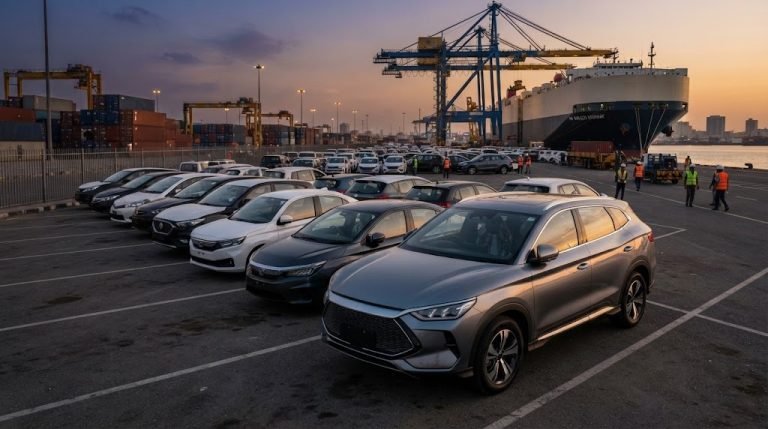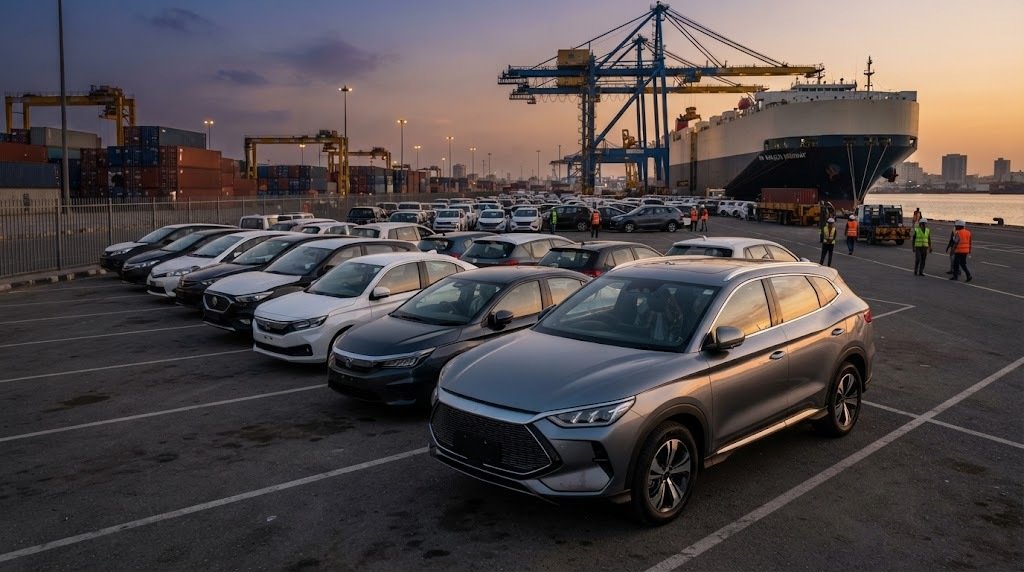


Pakistan is entering a new phase in its transport sector as electric vehicles (EVs) gradually move from being a niche technology to a serious part of the country’s mobility plans.
The shift is being driven by several factors: rising fuel costs, Pakistan’s dependence on imported oil, growing environmental concerns and the government’s push towards cleaner transportation.
Under the New Energy Vehicle (NEV) Policy 2025–30, Pakistan has set an ambitious target for new energy vehicles to account for 30% of new vehicle sales by 2030. The government also aims to develop a much larger charging network and encourage local manufacturing of electric vehicles.
But the bigger question is not whether Pakistan can introduce more EVs.
The question is whether Pakistan can build the infrastructure and energy ecosystem required to make the EV transition sustainable.
Why Pakistan Needs Electric Vehicles
Pakistan spends billions of dollars every year on petroleum imports. According to recent analysis cited by the State Bank of Pakistan, the country’s average annual oil import bill has been around $15.8 billion, while transport accounts for a significant share of national carbon emissions.
A successful shift towards electric mobility could therefore have benefits beyond cleaner roads.
Every petrol or diesel vehicle replaced by an electric alternative can potentially reduce fuel consumption and, over time, help reduce pressure on the country’s import bill.
For consumers, EVs also offer the attraction of lower running costs. Electric motors generally require less maintenance than conventional internal-combustion engines, while electricity can be cheaper per kilometre than petrol or diesel depending on the vehicle and charging tariff.
This is particularly important for Pakistan’s massive two-wheeler market.
Electric bikes and scooters could become one of the easiest entry points into the EV market because they are relatively affordable, consume less energy and are heavily used for daily commuting and delivery services.
Government Is Putting Money Behind the Transition
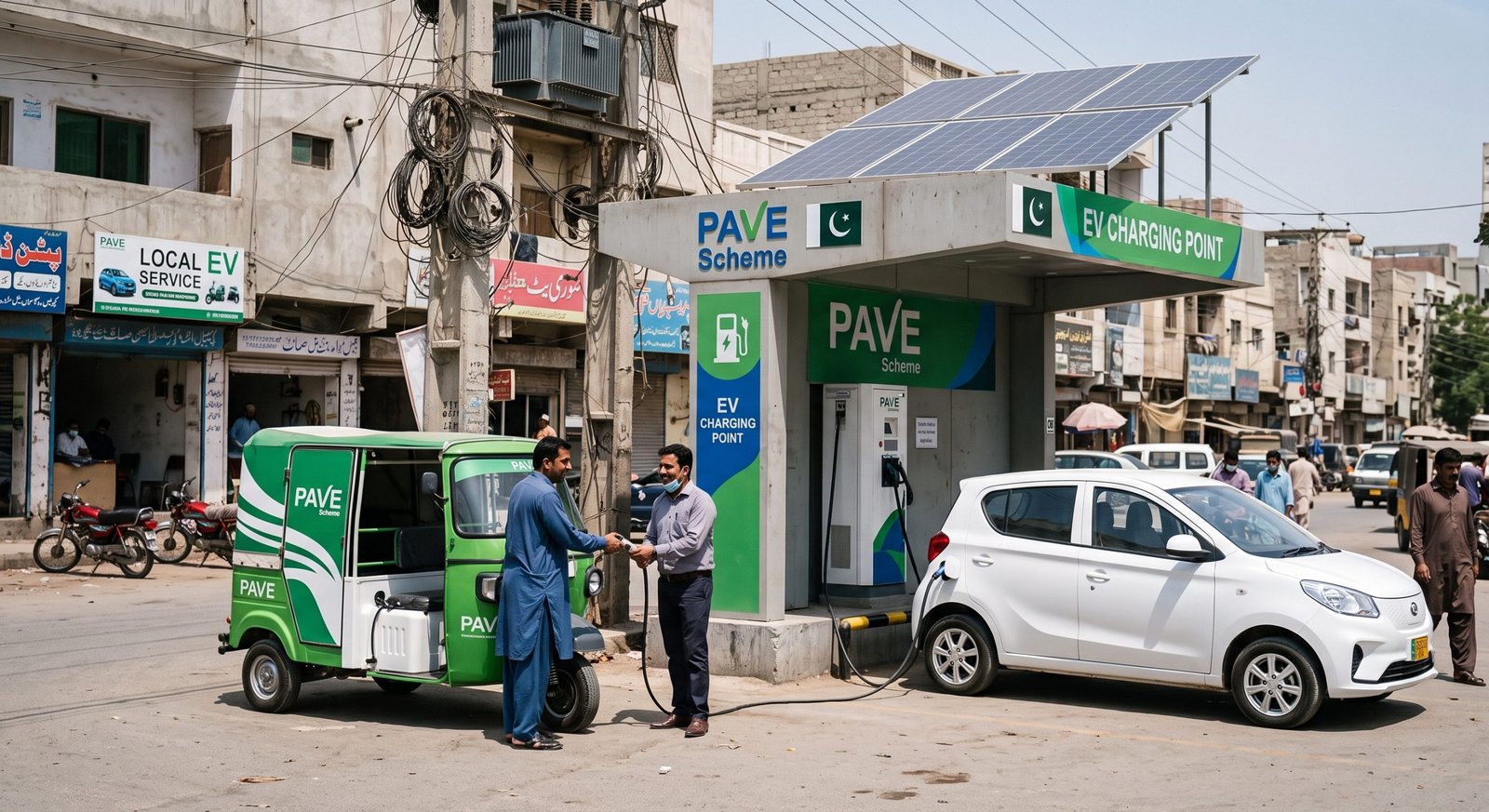
The government’s Pakistan Accelerated Vehicle Electrification (PAVE) scheme is another major step in this direction.
The programme provides for approximately Rs100.36 billion in subsidies over five years, covering electric bikes, rickshaws, loaders, cars, buses and trucks. The scheme is designed not only to increase EV adoption but also to support domestic manufacturing.
This matters because Pakistan’s EV transition cannot depend entirely on imported vehicles.
If local companies can manufacture vehicles, batteries, components and charging equipment, the transition could create new industries and employment opportunities.
It could also allow Pakistan to move beyond simply being an EV consumer and become part of the regional electric-mobility supply chain.
The Biggest Problem: Charging Infrastructure
An electric vehicle is only as useful as the infrastructure supporting it.
Pakistan currently has a very limited public charging network compared with what would be required for mass adoption. Recent estimates have put the number of public charging stations at only around 30 to 50, highlighting the scale of the infrastructure gap.
The government’s NEV plans envision a much larger network, with the policy targeting thousands of charging points by 2030.
But building chargers is only one part of the problem.
Charging stations need reliable electricity, suitable locations, commercially viable tariffs and maintenance networks. High-speed chargers also require significant electrical capacity.
If EV numbers increase faster than charging infrastructure, consumers could face long waiting times, range anxiety and limited intercity mobility.
For a country like Pakistan, motorway and intercity charging infrastructure will be particularly important.
A consumer may be comfortable buying an electric car for daily commuting in Karachi, Lahore or Islamabad. But confidence in EVs will remain limited if that same consumer cannot reliably drive from one major city to another.
What About Pakistan’s Electricity System?
This is where the EV revolution becomes more complicated.
At first glance, replacing petrol with electricity sounds straightforward. But electricity itself has to come from somewhere.
If millions of vehicles eventually shift to electric power, national electricity demand will rise. Pakistan therefore needs to ensure that additional EV demand does not simply create another burden on an already stressed energy system.
This makes renewable energy particularly important.
Solar power, combined with smart charging systems and battery storage, could help Pakistan manage some of the additional electricity demand created by EVs.
In other words, the real transition should not simply be:
Petrol → Electricity
It should eventually become:
Petrol → Clean Electricity → Electric Mobility
Without progress in the energy sector, part of the environmental benefit of EVs could be reduced.
Batteries: The Issue We Cannot Ignore
There is another challenge that receives comparatively less attention: batteries.
EV batteries are expensive, and their replacement can significantly affect the total cost of ownership of an electric vehicle.
Pakistan will also eventually need a proper system for battery collection, recycling and safe disposal.
Industry stakeholders have already highlighted battery recycling, localisation and a greener electricity grid as important requirements for a sustainable EV transition.
A country cannot claim to have a green transport system if old batteries simply become another environmental waste problem.
Developing a domestic battery recycling industry could therefore become a major business opportunity.
EVs Could Create New Industries
The EV transition is not only about cars and motorcycles.
It could create opportunities in:
- Battery manufacturing and recycling
- Charging stations
- Solar-powered charging
- Electric buses
- Fleet electrification
- Vehicle software
- Battery management systems
- Auto components
- Repair and maintenance
- Ride-hailing and delivery fleets
Pakistan could particularly benefit by focusing on high-mileage commercial vehicles.
Electric taxis, buses, delivery bikes and ride-hailing fleets travel far more kilometres than private vehicles. Electrifying these fleets could therefore generate larger fuel savings and emission reductions per vehicle. Recent analysis has also argued that Pakistan should prioritise high-mileage urban fleets during its EV transition.
The Consumer Question
For an ordinary Pakistani consumer, the decision is ultimately simple:
Does buying an EV make financial sense?
The answer will depend on the vehicle’s upfront price, financing options, battery life, charging availability, electricity rates, resale value and maintenance costs.
This is why affordability will be crucial.
Government subsidies can help create initial demand, but subsidies alone cannot build a sustainable market.
Manufacturers will eventually need to offer reliable vehicles at prices ordinary consumers can afford, while banks and financial institutions will need suitable financing products.
Opportunity — But Not Without Risks
Pakistan’s EV transition presents a significant opportunity.
It can reduce dependence on imported petroleum, lower transport emissions, create new industries and potentially reduce running costs for consumers.
But there are serious risks too.
Weak charging infrastructure, expensive batteries, inconsistent policies, limited local manufacturing, financing constraints and electricity-sector challenges could slow adoption.
The State Bank of Pakistan has already warned that the success of the NEV Policy will depend on sustainable financing, infrastructure development and coordinated implementation.
That warning is important.
Pakistan does not simply need more electric vehicles.
It needs an EV ecosystem.
The Road Ahead
Pakistan’s 2030 target is ambitious, but targets alone do not guarantee transformation.
The country will need consistent policies, private-sector investment, local manufacturing, reliable charging infrastructure and a stronger electricity system.
If these pieces come together, EVs could become more than an environmental initiative. They could become part of Pakistan’s broader economic strategy — reducing fuel imports while creating new industries and jobs.
But if infrastructure fails to keep pace with vehicle adoption, Pakistan could end up with thousands of electric vehicles competing for limited charging facilities and putting additional pressure on the power system.
The EV revolution, therefore, is neither simply a solution nor another problem.
It is an opportunity — but only if Pakistan builds the infrastructure to support it.