

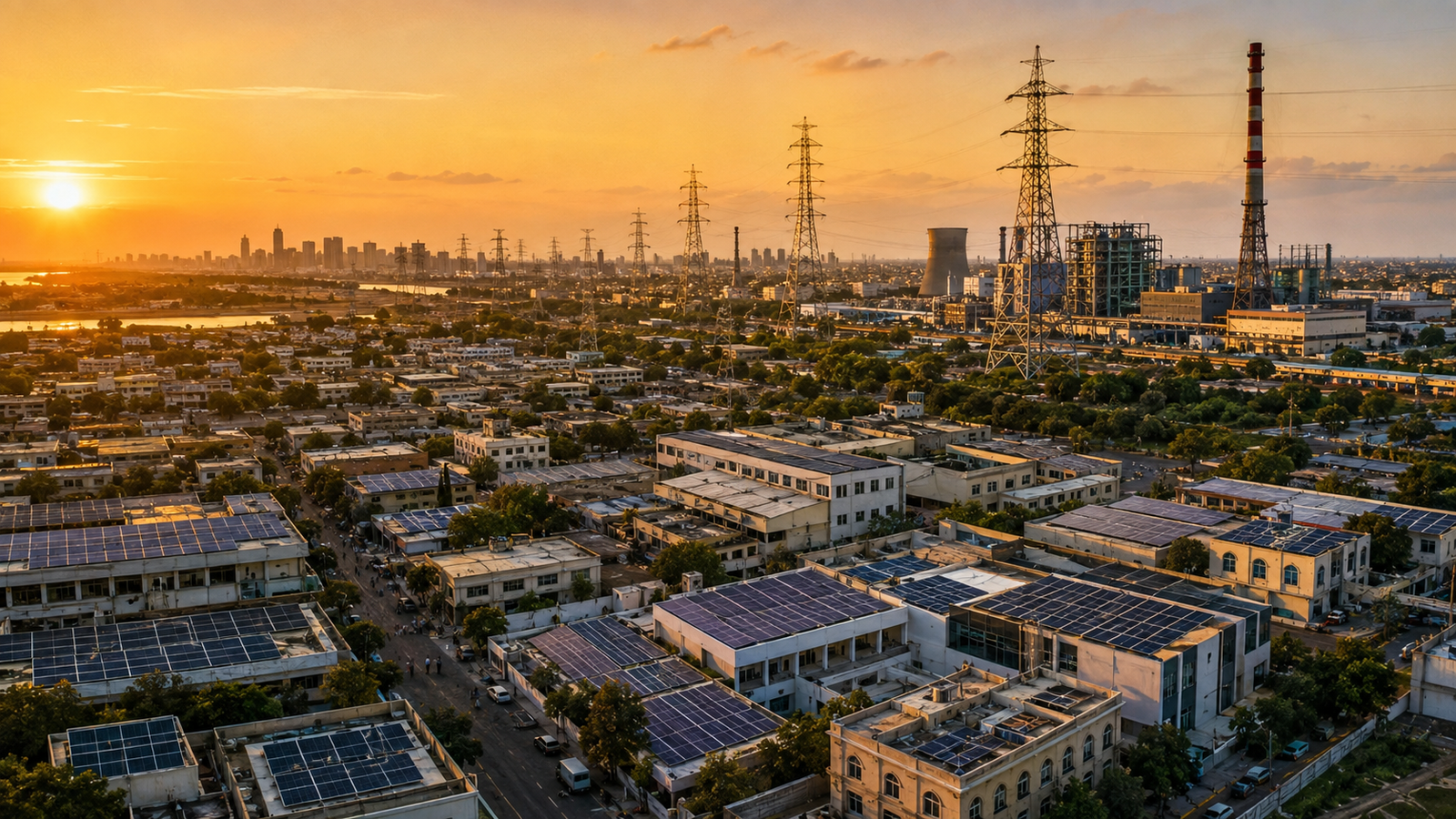
For years, Pakistan’s energy debate revolved around one basic problem: how to produce enough electricity.
Today, the country is facing a very different question — what happens when millions of consumers begin producing electricity themselves?
Solar panels have spread rapidly across Pakistani homes, factories, farms and businesses. At a recent Parliamentary Forum on Energy and Economy dialogue, participants estimated that Pakistan has deployed around 50 GW of solar capacity across different segments, much of it without direct public subsidy.
That sounds like an energy success story. And in many ways, it is.
For families struggling with high electricity bills and businesses trying to remain competitive, rooftop solar has provided something the traditional power system often struggled to deliver: greater control over energy costs.
But Pakistan’s solar revolution is also exposing weaknesses in the wider energy system.
The Problem Is Bigger Than Solar Panels
Pakistan built much of its electricity and fuel planning around expectations of growing grid demand. Power plants, transmission infrastructure and long-term fuel arrangements were designed around those assumptions.
Solar is changing them.
When a household installs panels, it buys less electricity from the grid during daylight hours. When thousands of factories and commercial buildings do the same, national grid demand can change significantly.
Yet many of the system’s costs do not disappear simply because electricity consumption falls.
Pakistan still has power-sector obligations to meet, while its LNG arrangements can include contractual commitments even when demand for gas-fired generation declines.
That creates an uncomfortable situation: the country can need less imported fuel while still carrying financial exposure linked to it.
Solar, LNG and Circular Debt
This is where solarisation connects directly with Pakistan’s circular debt problem.
If more financially capable consumers reduce their dependence on the grid, electricity sales can fall while fixed system costs remain. Those costs then have to be recovered somehow.
Higher tariffs risk encouraging even more consumers to install solar, which can further reduce grid demand.
Pakistan therefore faces the possibility of a difficult cycle: expensive grid electricity encourages solar adoption; solar adoption reduces grid sales; fixed costs remain; and remaining consumers face greater pressure.
The answer cannot simply be to slow solar down.
Nor can Pakistan immediately abandon LNG and conventional generation. Solar production changes throughout the day, while households and industries still need reliable electricity after sunset and during periods of weak generation.
Pakistan needs backup power, storage and a functioning national grid.
The Energy System Has to Become Flexible
The smarter approach is to redesign the system around the new reality.
Pakistan needs more flexible LNG procurement instead of unnecessarily rigid future commitments, stronger transmission infrastructure, battery storage, better demand forecasting and electricity pricing that fairly reflects the cost of maintaining the grid.
It also needs policies that do not turn solar households and grid-dependent households into opposing groups.
Solar should become part of the national energy system rather than something operating against it.
Pakistan’s solar boom is ultimately good news. Consumers have responded to expensive electricity by investing their own money in an alternative.
But technology has moved faster than policy.
The biggest question is no longer whether solar will transform Pakistan’s energy sector.
It already has.
The question now is whether Pakistan can transform its grid, fuel contracts and electricity market quickly enough to catch up.